

Key Takeaways
- No Three-Phase Rewiring: A rotary screw air compressor 2in1 system single phase runs on standard 220V–240V power with a 100% continuous duty cycle.
- Choose Based on Application: Select a 2-in-1 unit for cost-effective auto assembly or basic painting, or upgrade to a 4-in-1 unit if your budget allows and you need dry air.
- Stabilize Power with a Transformer: Installing a dedicated voltage transformer prevents startup trips on borderline 208V commercial lines.
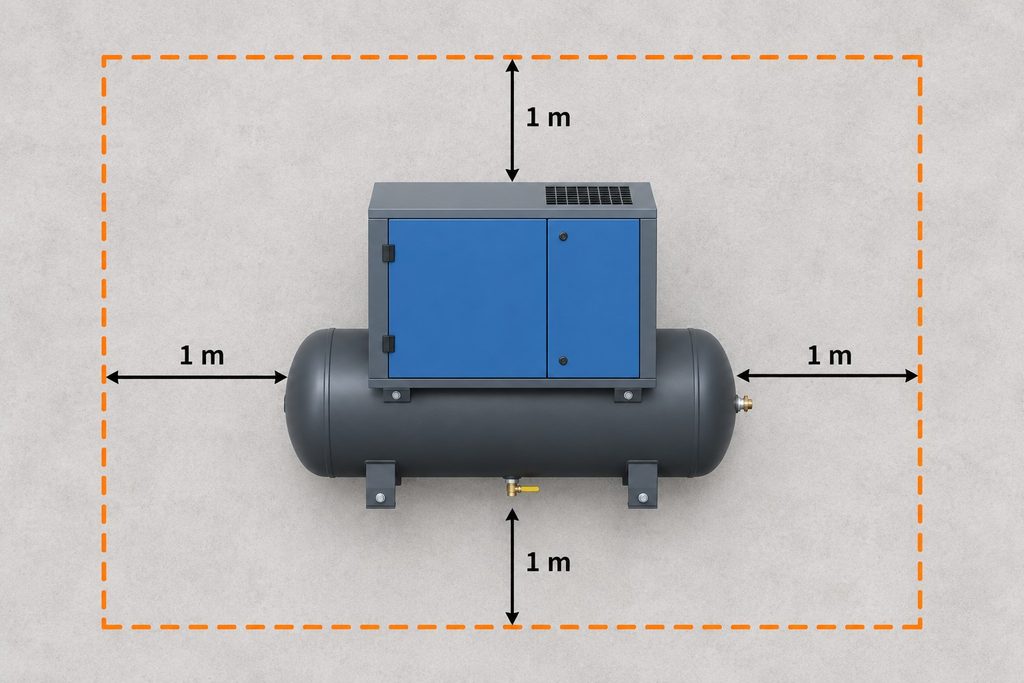
- Leave 1 Meter of Clearance: Always maintain 1 meter (3.3 ft) of open space on the front, back, left, and right sides for proper cooling.
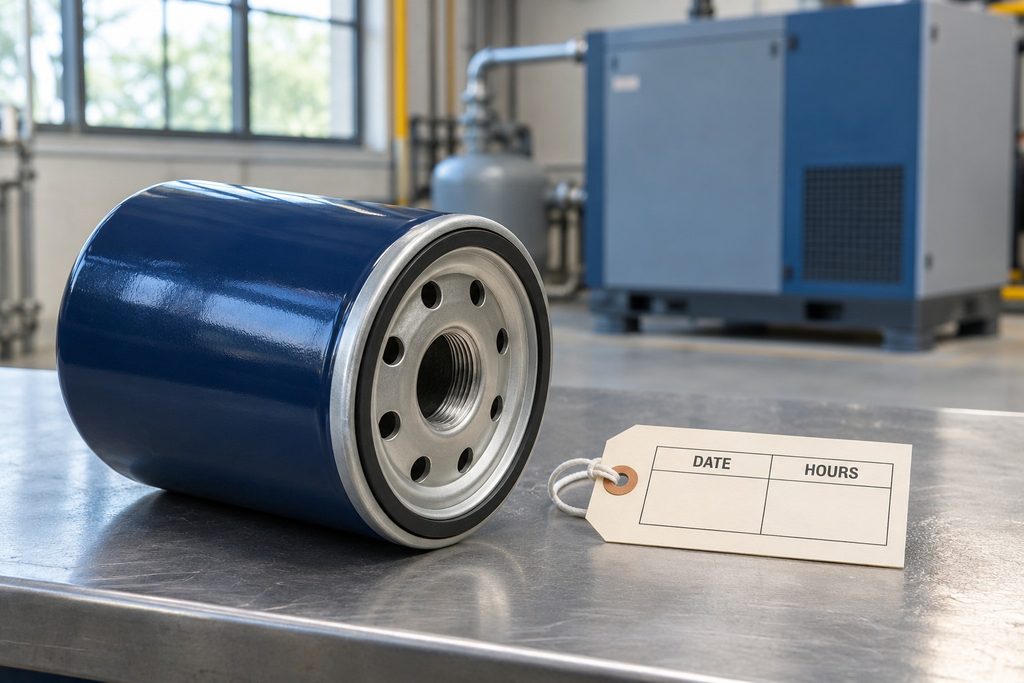
- Simple In-House Upkeep: External spin-on air-oil separators and on-part maintenance schedule cards make servicing fast for non-mechanics.
- Are you tired of your noisy piston compressor overheating right in the middle of a busy workday? In this guide, we show you how to upgrade to continuous industrial airflow without paying thousands of dollars for a three-phase electrical upgrade.
- Over years of helping small workshops size and install compressed air systems, we have seen the right single-phase setup cut downtime to zero while saving up to 40% in floor space. Below, we cover how 2-in-1 systems work, how to prevent single-phase voltage trips, and how to set up your machine for effortless maintenance.
- Ready to upgrade your shop’s air supply? Let’s dive in.
What Is a Rotary Screw Air Compressor 2in1 System Single Phase?
A rotary screw air compressor 2in1 system single phase combines two core machines onto one compact frame: a rotary screw compressor and an air receiver tank. Instead of buying separate components and hiring a pipefitter to connect them, you receive a pre-piped, factory-tested unit ready to run on 220V–240V single-phase power.
(Note: Do not confuse single-phase with single-stage. “Single-phase” describes your building’s electrical supply, while “single-stage” refers to the mechanical compression steps inside the pump.)
How the Integrated 2-in-1 Design Works
Traditional separate-component setups rely on external hoses and fittings that frequently leak and cause pressure drops. By mounting the sound-dampened screw cabinet directly onto the receiver tank, a 2-in-1 design eliminates unnecessary piping and shrinks your equipment footprint.
Inside the enclosure, twin helical rotors trap and compress air continuously. Unlike piston pumps that slam up and down, rotary screws deliver smooth, vibration-free airflow.
2-in-1 vs. 4-in-1: Which Configuration Fits Your Shop?
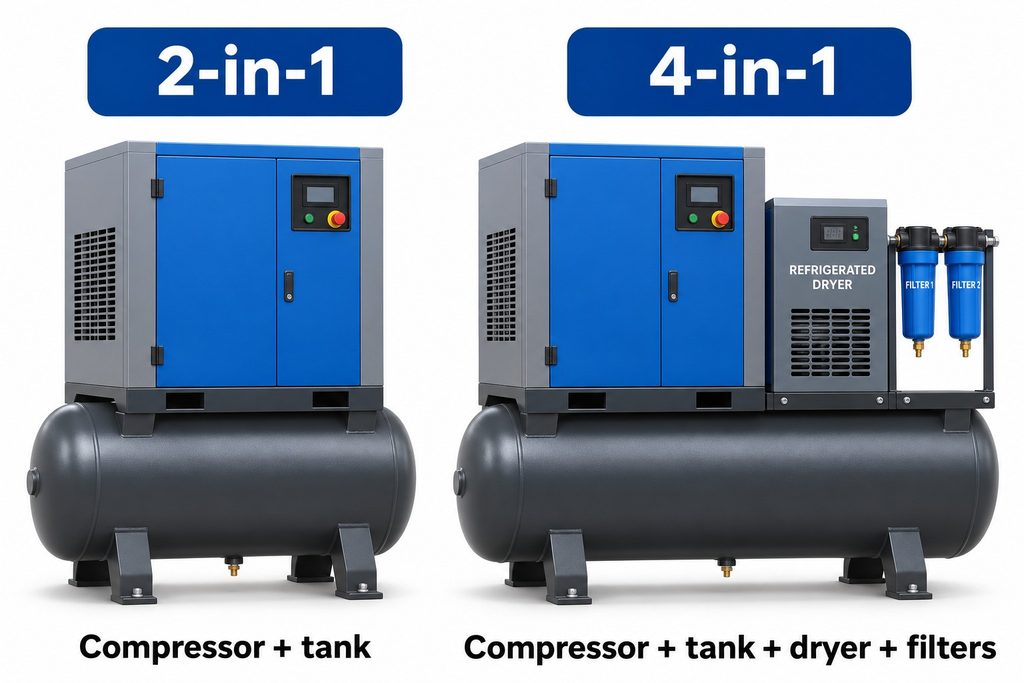
Many buyers ask whether they should buy a 2-in-1 system (compressor + tank) or a 4-in-1 system (compressor + tank + refrigerated air dryer + inline filters). We recommend matching the configuration directly to your daily tasks and budget:
When a 2-in-1 System Makes Sense: If you are working with a tighter budget and handle straightforward jobs—such as general automotive assembly, tire service, or basic spray painting—a 2-in-1 unit gives you reliable power without extra upfront cost.

When to Choose a 4-in-1 System: If your budget allows for an all-in-one investment, or if you operate moisture-sensitive CNC machines and precision paint booths, a 4-in-1 unit is a smarter fit. You get dry, filtered air immediately without adding external dryers later.
Let’s look at the anatomical differences:
5 Key Benefits of a Single-Phase 2-in-1 Rotary Screw Compressor
Avoid Three-Phase Utility Costs: High-torque single-phase motors and soft-start controls run directly off existing 208V–240V panels, saving you $5,000 to $15,000+ in electrical upgrades.
Save Up to 40% Floor Space: Stacking the compressor cabinet over the receiver tank frees up valuable square footage in crowded bays.
Run at a 100% Duty Cycle: Oil-flooded rotary screws manage heat continuously, letting you run sanders and assembly tools all day without cooldown breaks.
Keep Shop Noise Low (62–68 dBA): Insulated steel cabinets reduce operating noise to the level of a normal conversation, so you can place the unit right on the shop floor.
Deploy Fast with Plug-and-Play Setup: Simply position the skid with a forklift, connect your main air line, wire the electrical feed, and start working.
Quick Comparison: 2-in-1 vs. 4-in-1 vs. Piston Compressors
Feature | Single-Phase 2-in-1 Screw | Single-Phase 4-in-1 Screw | Two-Stage Piston |
Included Hardware | Screw Compressor + Tank | Compressor + Tank + Dryer + Filters | Piston Pump + Tank |
Power Requirement | 220V–240V Single-Phase | 220V–240V Single-Phase | 220V–240V Single-Phase |
Duty Cycle | 100% Continuous | 100% Continuous | 50%–70% Intermittent |
Noise Level | 62–68 dBA | 63–69 dBA | 80–88 dBA |
Best Applications | Auto assembly, basic painting, general tools | Precision painting, CNC, packaging | Intermittent shop use |
Sizing and Electrical Setup: Avoiding Single-Phase Pitfalls
Proper sizing and clean electrical power protect your compressor from nuisance breaker trips. Follow these three steps before you order.
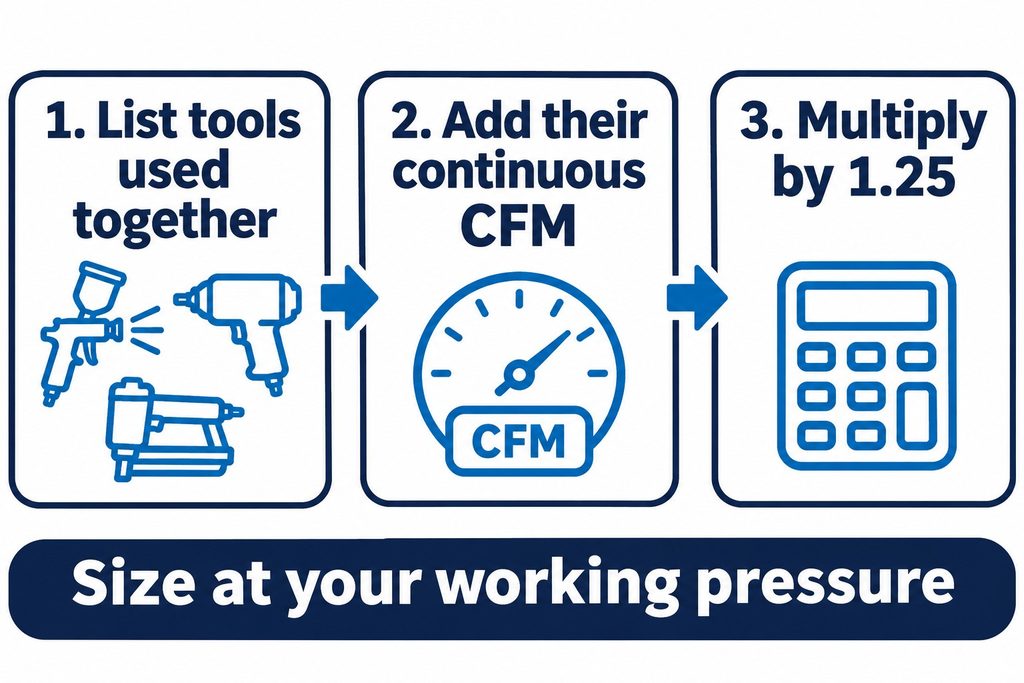
Step 1: Calculate Your Simultaneous CFM Demand
Focus on CFM (Cubic Feet per Minute—the volume of air your tools consume) at your required PSI (Pounds per Square Inch—the air pressure force, usually 115–145 PSI). You can verify standard tool consumption guidelines through the Compressed Air and Gas Institute (CAGI) selection resources.
Add up the CFM ratings of every tool that runs at the exact same time, then multiply by 1.25. That 25% buffer covers minor line losses and future tool additions.
Step 2: Match Motor Horsepower to Your Breaker Panel
Single-phase motors draw higher amperage than three-phase motors of the same size. In practice, 10 HP (7.5 kW) is the maximum practical limit for standard single-phase commercial panels.
Motor Size | Output (CFM @ 115–125 PSI) | Typical Tank Size | Full Load Amps (230V) | Recommended Breaker |
3 HP (2.2 kW) | 10 – 12 CFM | 30 – 50 Gallon | 15 – 17 Amps | 25 – 30 Amp |
5 HP (3.7 kW) | 16 – 20 CFM | 50 – 60 Gallon | 23 – 26 Amps | 40 Amp |
7.5 HP (5.5 kW) | 25 – 30 CFM | 60 – 80 Gallon | 34 – 38 Amps | 50 – 60 Amp |
10 HP (7.5 kW) | 35 – 42 CFM | 80 – 100 Gallon | 44 – 50 Amps | 60 – 70 Amp |
Step 3: Install a Dedicated Voltage Transformer
Many small commercial buildings advertise 220V or 240V single-phase power, yet real-world voltage often measures closer to 208V and drops further during peak hours. Under-voltage forces 7.5 HP and 10 HP motors to draw excessive startup current, tripping overload relays and wearing out contactors.
Based on our field installation experience, we strongly advise adding a dedicated step-up or voltage-stabilizing transformer ahead of the compressor disconnect. Locking in a steady 230V–240V feed ensures smooth startups and extends motor life. (Always have a licensed electrician verify wire sizing per NFPA 70 National Electrical Code guidelines.)
Below is the standard buck-boost transformer install blueprint:
Workshop Placement and Hassle-Free Maintenance
Where you place your compressor and how easily you can reach wear parts determine its long-term reliability.
Follow the 1-Meter Clearance Rule
Because 2-in-1 units have a compact footprint, many owners push them tightly into a corner. Blocking the intake vents traps hot air around the oil cooler and triggers high-temperature shutdowns.
Always leave at least 1 meter (3.3 feet) of unobstructed clearance on the front, back, left, and right sides. This space keeps cooling air flowing freely and lets you open every service door completely.
Maintain Your System Without a Full-Time Mechanic
You do not need an in-house technician to keep a single-phase rotary screw compressor running smoothly:
External Spin-On Air-Oil Separator: Traditional screw compressors hide the separator inside a heavy bolted tank that takes over an hour to open. Our design mounts an external spin-on air-oil separator right next to the oil filter, letting you swap it in under 10 minutes just like a car oil filter.
On-Part Precaution Notices and Schedule Cards: Busy shops often lose track of service hours. Every replacement filter and separator ships with clear precaution instructions and a physical maintenance schedule card attached directly to the part so you can log dates and run hours on the spot.
Clearance and internal servicing features are detailed below:
Frequently Asked Questions (FAQ)
Do I really need a transformer for a single-phase rotary screw air compressor?
If your electrician measures a steady 230V–240V under load, you can wire the unit directly. However, if your shop runs on 208V power or experiences voltage dips, installing a dedicated transformer prevents startup trips and protects your motor.
Should I buy a 2-in-1 or a 4-in-1 rotary screw air compressor?
Choose a 2-in-1 system if you want the best value for basic automotive assembly or simple spray painting. Choose a 4-in-1 system if your budget allows and your tools require dry, filtered air.
How much space do I need around a 2-in-1 air compressor?
Leave a minimum of 1 meter (3.3 feet) on all four sides—front, back, left, and right—to prevent overheating and maintain full service access.
Next Steps
Now that you know how to size your CFM, stabilize single-phase voltage, and plan your floor layout, your next step is checking your shop’s exact electrical voltage and tool list. For more tips on keeping your compressed air clean and dry, read our guide on [How to Choose the Right Air Dryer for Your Workshop].
Get a Custom Single-Phase Compressor Recommendation
As a dedicated compressed air manufacturer with over [10] years of engineering experience, we build reliable single-phase 2-in-1 and 4-in-1 rotary screw systems tailored for growing workshops.
Ready to find the right fit for your shop? [Download our Single-Phase Compressor Catalog] or [Request a Free Sizing Consultation] with your voltage reading and tool list today.