Introduction to Compressed Air Systems
Moisture is one of the biggest threats in modern compressed air systems. Although compressed air appears clean, it contains significant amounts of water vapor and contaminants such as oil aerosols. If not properly treated, moisture buildup inside the air passage can cause corrosion, damage equipment, and reduce overall system efficiency.
Understanding the different compressed air dryer types is essential for achieving superior air quality, protecting pneumatic equipment, and preventing costly repairs.
Why Moisture Control Is Critical in Compressed Air Systems
Moisture in compressed air exists in the form of water vapor. When compressed air cools downstream, this vapor condenses into liquid water, leading to corrosion, valve sticking, product contamination, and pneumatic failure.
- Corrosion happens quickly in compressed air systems. Water vapor corrodes all metal parts inside. It damages your pneumatic equipment over time. Rust forms in the air passages. This leads to leaks and equipment failure. Moisture also contaminates your products. Product quality suffers significantly. You face costly repairs and production downtime.
- Wet air reduces the performance of your tools. Pneumatic tools wear out much faster than normal. Maintenance becomes more frequent and expensive. Your processes slow down significantly. Production stops completely. Downtime costs your business money.
In critical applications such as pharmaceuticals, electronics, and food production, even small amounts of moisture content can affect compliance and safety standards.
That is why air dryers work as an essential part of the compressed air industry. Their primary function is to remove moisture from the air stream before it reaches downstream equipment.
How Air Dryers Work
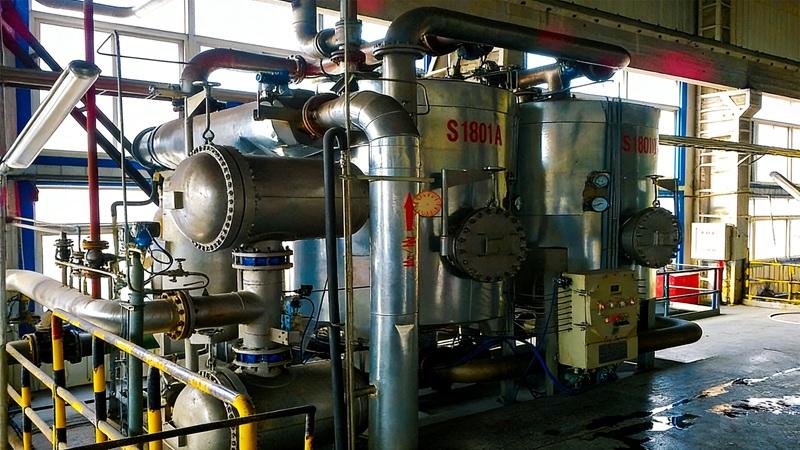
Air dryers work by removing moisture from the air stream. This prevents condensation and corrosion in compressed air systems. The drying process uses different methods to absorb moisture.
Some dryers use desiccant material like silica gel. Others use cooling systems to remove water vapor. Different methods work for different applications.
The most important parameter when selecting a dryer type is pressure dew point (PDP).
Dew point is the temperature at which condensation begins under operating pressure. Lower dew points mean extremely dry air.
Typical dew point ranges:
- Refrigerated air dryer: +3°C to +5°C
- Desiccant air dryer: -20°C, -40°C, or -70°C
- Membrane air dryers: application dependent, often up to -20°C
If your process requires low dew points, selecting the wrong dryer type may lead to moisture buildup and equipment failure.
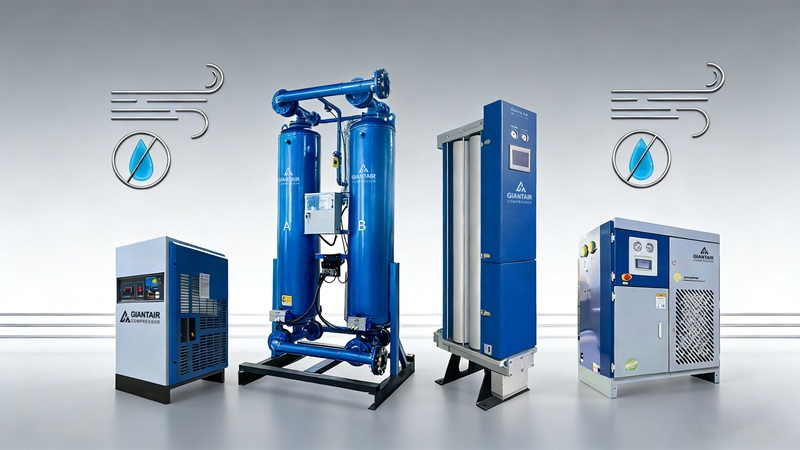
Types of Compressed Air Dryers
There are several types of compressed air dryers available. Each type has unique benefits and applications.
Refrigerated Air Dryer
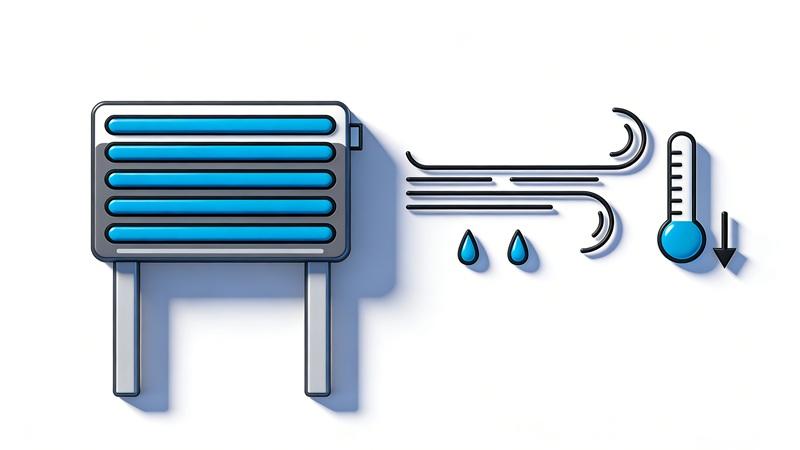
A refrigerated air dryer removes moisture by cooling incoming air through a refrigeration cooling system. Inside the dryer, a heat exchanger lowers the temperature of the compressed air. This causes condensation, which is separated and drained.
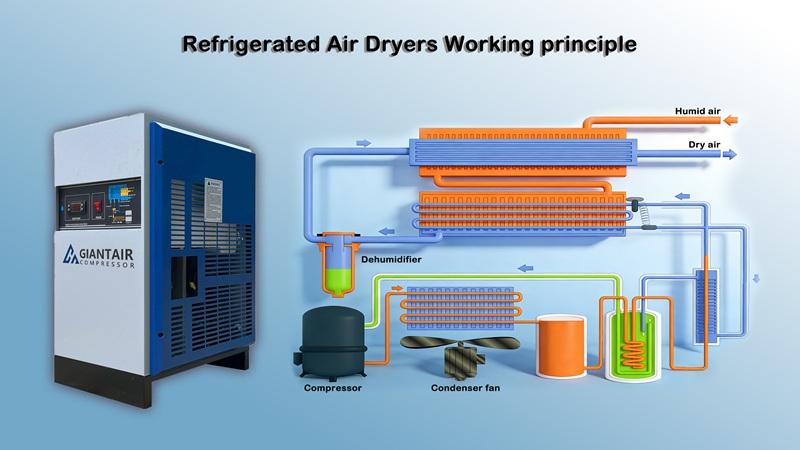
Refrigerated dryers are suitable for general manufacturing and non-critical applications.such as:
- General production lines
- Automotive workshops
- Machinery operations
- Non-critical air applications
Key characteristics:
- Pressure dew point around +3°C
- Low operating costs
- Stable operation
- Suitable for pneumatic tools and general production
A non cycling refrigerant dryer improves energy efficiency by adjusting cooling output based on demand.
Refrigerated air systems are ideal when extremely dry air is not required.
Desiccant Air Dryers
A desiccant air dryer uses desiccant material such as activated alumina or silica gel to absorb moisture from the air stream.
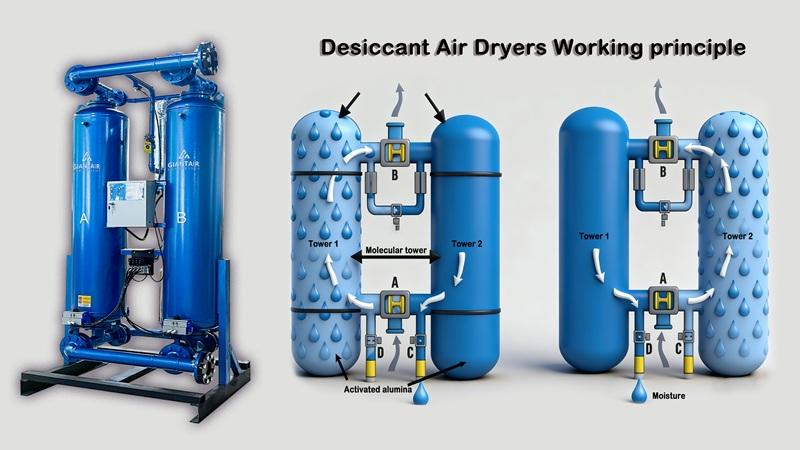
Desiccant dryers typically use two towers,one tower dries the compressed air,the other tower regenerates using purge air
This dual-tower design allows continuous operation.
Desiccant dryers are commonly used in:
- Pharmaceutical production
- Electronics manufacturing
- Food and beverage packaging
- Chemical processing
Characteristics:
- Achieves low dew points down to -70°C
- Suitable for critical applications
- Used in food processing, beverage manufacturing, electronics, and pharmaceuticals
- Desiccant material must be replaced regularly
Because regeneration requires purge air, energy consumption is higher compared to refrigerated dryers. However, desiccant air systems provide superior air quality when extremely dry air is required.
Membrane Air Dryer
Membrane air dryers use a semi-permeable membrane to remove moisture. They provide a simple and efficient solution for drying compressed air. The membrane allows water vapor to pass through while keeping dry air in the stream.
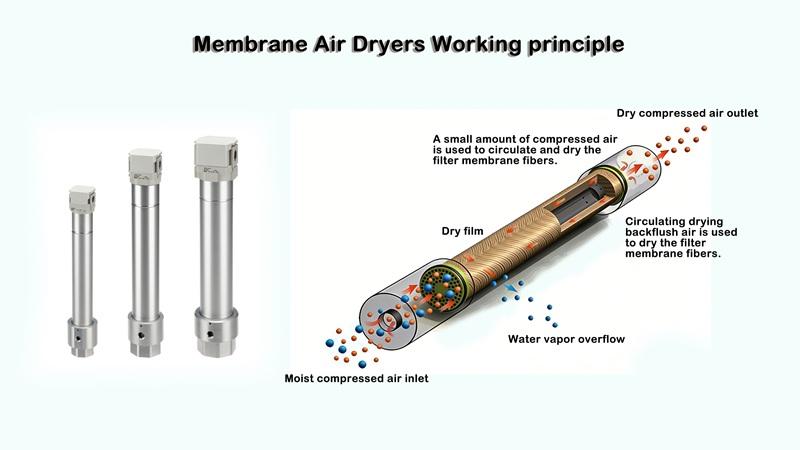
These dryers suit applications where air doesn’t need to be extremely dry,such as:
- Food processing
- Packaging operations
- Laboratory environments
- Instrument air systems
They work well for these industries. They’re simple to operate. They’re efficient and cost-effective.
Membrane air dryers are relatively low maintenance. They do not require electricity to operate. This makes them a popular choice. Operating costs stay low. You don’t need complex maintenance schedules. Installation is straightforward. They’re reliable and durable.
Chemical Air Dryers
Chemical air dryers use chemical reactions to remove moisture from compressed air. These dryers absorb water vapor through chemical absorption. The process is different from desiccant or refrigerated methods.
Chemical air dryers work in specific applications. They’re used where other dryers fall short. Industries requiring specialized drying use them. They achieve very low dew points. They work in extreme conditions.
Chemical air dryers have advantages and disadvantages. They achieve excellent drying results. Operating costs can be high. They require more maintenance than other types. Chemical replacement is necessary regularly. They work well for critical applications where air quality is essential.
Deliquescent Air Dryers
Deliquescent air dryers use deliquescent material to absorb moisture. The material dissolves as it absorbs water. This creates a liquid that drains away. It’s a simple drying method.
Deliquescent air dryers work in specific applications. Small operations use them. Low-demand applications benefit from them. They’re cost-effective for certain needs. They work in food production and beverage manufacturing.
Deliquescent air dryers have pros and cons. Initial cost is very low. Operating costs are minimal. Maintenance is simple. However, material replacement happens frequently. Dew point control is less precise. They work best for applications not requiring extremely dry air.
Comparison of Compressed Air Dryer Types
| Dryer Type | Typical PDP | Energy Use | Maintenance Level | Best Applications |
|---|---|---|---|---|
| Refrigerated | +3°C | Low | Low | General industry |
| Desiccant | -20°C to -70°C | Moderate–High | Medium | Critical low moisture |
| Membrane | Up to -20°C | Very Low | Low | Remote systems |
| Deliquescent | Around +10°C | Very Low | Media refill | Small/temporary systems |
This comparison highlights why selecting the correct dryer type depends heavily on application requirements rather than price alone.
Refrigerated vs Desiccant Dryer: How to Decide
This is the most common decision in industrial compressed air systems.
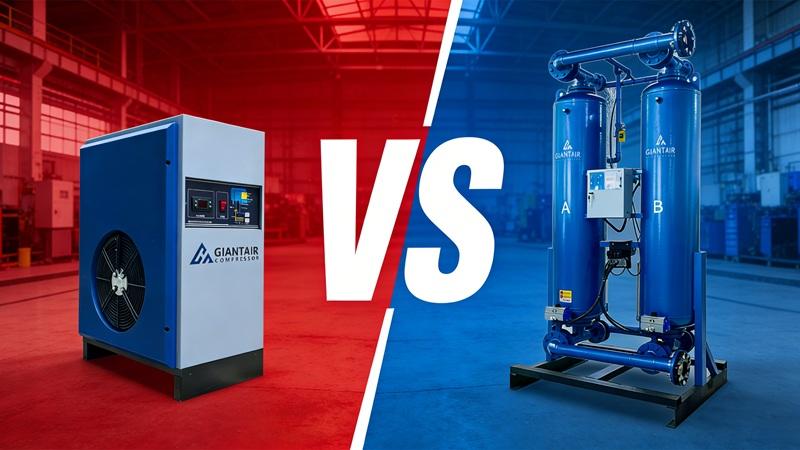
Performance
- Refrigerated dryers meet general industrial standards (+3°C PDP).
- Desiccant dryers are required when dew points below -20°C are mandatory.
Operating Cost
Refrigerated dryers consume relatively low electrical power.
Heatless desiccant dryers may consume 15–20% of compressed air for regeneration, increasing overall system energy cost.
Investment
Desiccant systems typically have higher initial cost and more complex control systems.
Decision Rule
- If your required dew point is +3°C → Refrigerated dryer is sufficient.
- If your required dew point is ≤ -20°C → Desiccant dryer is necessary.
Correct selection prevents unnecessary capital expenditure and long-term operating losses.
Industrial Air Dryer Installation and System Integration
Proper installation is critical for compressed air dryer performance. The dryer must be placed correctly in your system. System integration affects how well your dryer works. Water separators and air receivers play important roles.
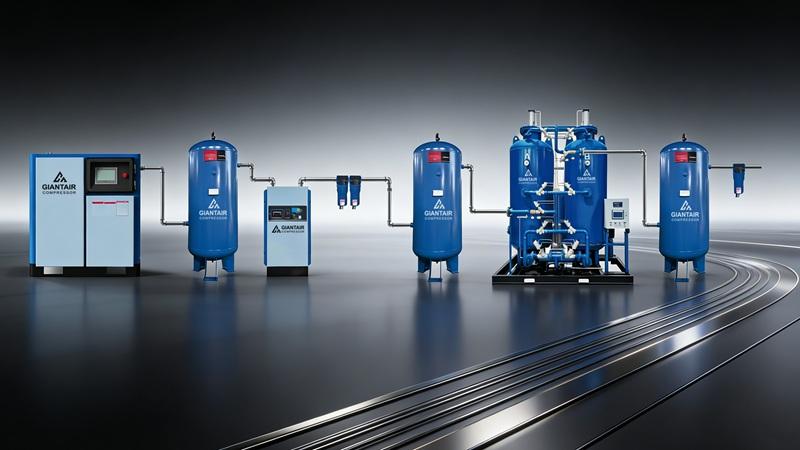
Proper dryer placement matters significantly. The dryer should be located after the air compressor. It needs to be before pneumatic equipment. The air passage design affects performance. Placement determines how effective moisture removal becomes. You want the dryer positioned where air flows naturally. Pressure and temperature affect dryer placement decisions.
Pre-filters remove large particles from compressed air. After-filters catch remaining contaminants. Pre-filters protect your dryer from damage. They extend dryer life. After-filters ensure clean air reaches your equipment. Both filter types are essential. They work together to maintain air quality. Filter replacement keeps systems running smoothly.
Water separators remove bulk moisture before drying. Air receivers store compressed air. They work with your dryer system. Proper integration maximizes dryer efficiency. Water separators reduce dryer workload. Air receivers provide storage capacity. Together they create a complete system.
How to Select the Right Dryer for Your Air Compressor
Selecting the right dryer is critical. Your air compressor needs the proper dryer type. The wrong choice leads to problems. Understanding your needs prevents mistakes.

- Pressure dew point determines air quality. Lower dew points mean drier air. Critical applications require extremely dry air. Air quality standards exist for good reason.
- Dew point requirements vary by industry. Electronics manufacturing needs very low dew points. Food processing has different requirements. Pharmaceuticals demand superior air quality. Your application determines the dew point you need.
- Flow rate affects dryer selection significantly. Operating pressure matters for dryer performance. Ambient conditions impact how dryers work.
- Temperature and humidity affect drying efficiency. Seasonal conditions change dryer requirements. Your compressed air system must handle flow demands. The air compressor capacity determines flow rate.
- Continuous air demand requires different dryers. Intermittent use has different needs. Your operation type determines requirements. Continuous operations need reliable drying. Peak flow requirements matter most.
- Operating costs differ between dryer types. Initial investment varies significantly. Energy efficiency affects long-term costs. Calculate total cost of ownership. Don’t just look at initial price. Superior air quality protects products.
- Oversizing or undersizing the dryer causes problems. Undersizing fails to remove moisture. Calculate your actual needs carefully. Flow requirements must match dryer capacity. Ignoring ambient and seasonal conditions leads to failure.
- Temperature changes affect dryer performance. Cold weather and hot weather create different challenges. Your dryer must handle all conditions. Selecting dryer type based on price alone is a mistake. The cheapest option often costs more long-term. Quality matters for reliability. Operating costs exceed initial savings. Prevent downtime with proper selection.
Conclusion
Understanding compressed air dryer types is essential for maintaining superior air quality in various industries. From refrigerated air dryers for general manufacturing to desiccant dryers for critical applications, each technology serves a specific purpose.
Selecting the correct dryer type protects pneumatic equipment, prevents costly repairs, reduces moisture buildup, and ensures stable system operation.
If you are planning to upgrade your compressed air system or require extremely dry air for food processing, beverage manufacturing, or other critical environments, contact our team for expert guidance.
We will help you select the right solution to ensure clean, dry, and reliable compressed air for your operation.