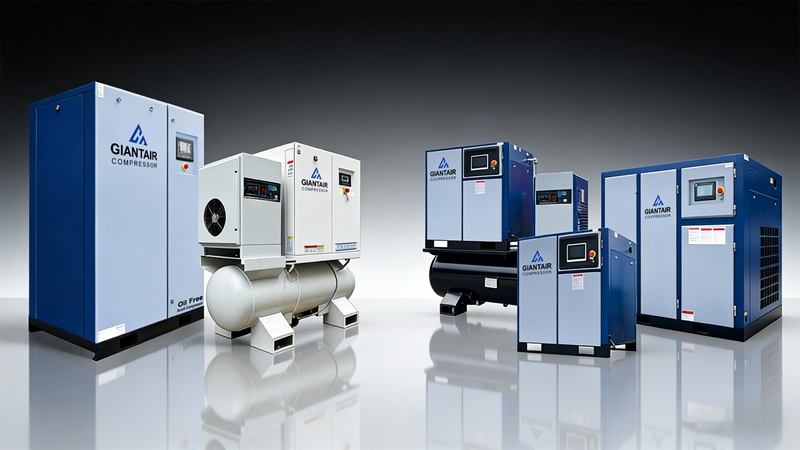
Compressed air systems power many industrial processes. Choosing the right compressor affects efficiency, reliability, and operating cost. Rotary screw compressors and scroll compressors are two common technologies used to produce compressed air. Each uses a different compression process and mechanical design.
Rotary screw air compressors use two rotors that trap and compress air as they rotate. Scroll compressors use interlocking spiral scrolls that compress air through internal compression. Both machines deliver reliable performance, but they serve different air demand levels and operating environments.
This guide explains how each compressor operates, their advantages, limitations, and the applications where each performs best. Understanding these differences helps facility managers and engineers choose equipment that delivers efficient, high-quality compressed air with impressive energy savings.
What Is a Scroll Compressor?
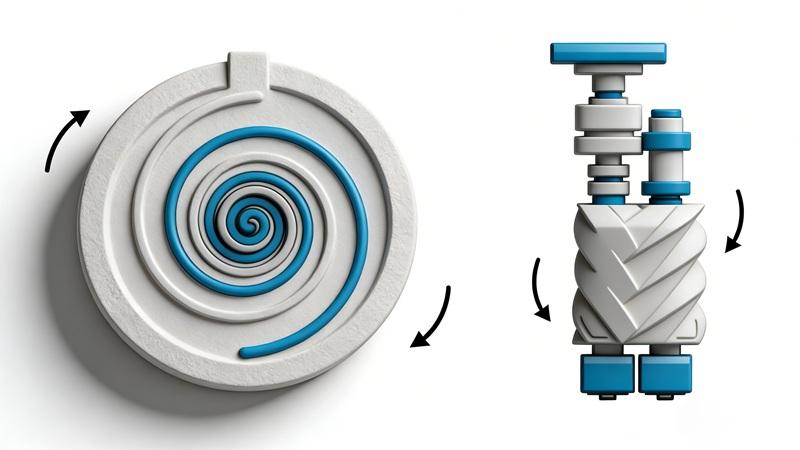
A scroll compressor is a rotary compressor that produces compressed air using two spiral scroll components. One scroll remains fixed while the other moves in a small orbit. This motion traps air in pockets that slowly shrink in volume. As the pockets move inward, the compression process increases pressure until the air exits through the discharge port.
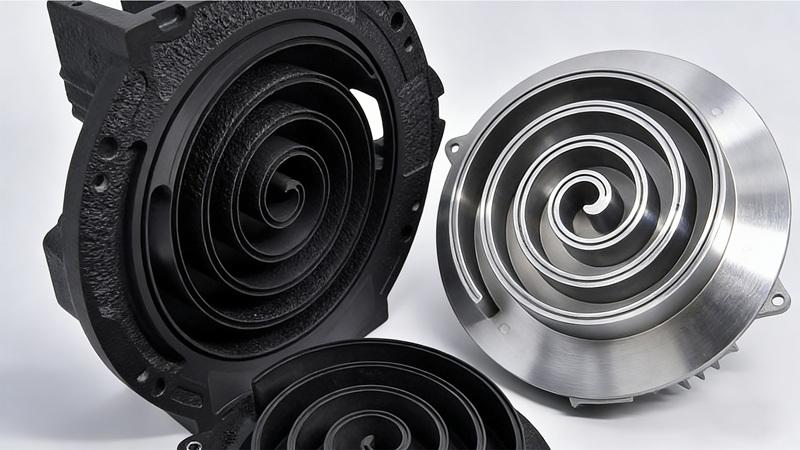
Air enters through the outer suction area and travels toward the center during compression. The design creates internal compression with tight sealing that limits leakage and improves efficiency. Because the machine uses few moving parts, scroll compressors are compact, reliable, and quiet. Most units deliver oil free air, which reduces oil carryover and protects sensitive equipment, reducing the need for maintenance.
Scroll compressors are commonly used in refrigeration systems, medical equipment, laboratories, and small industrial applications. Sensitive environments for which other compressors may not be appropriate. They operate best in environments with moderate air demand rather than continuous heavy duty production.
Key characteristics include:
- Typical capacity between 2 and 15 CFM
- Discharge pressure usually between 90 and 120 PSI
- Very quiet operation around 70–75 dB
- Oil free design with very low oil carryover
- Compact units that require minimal space
- Reliable operation with fewer moving parts
Limitations to consider:
- Not suitable for high air demand or large industrial processes
- Fixed capacity can reduce energy efficient operation at partial loads
- Less durable in harsh environments compared with screw compressors
- Not designed for continuous 24/7 operation
What Is a Rotary Screw Compressor?
A rotary screw compressor produces compressed air using two interlocking rotors. One rotor is male and the other female. As they rotate, air enters through the suction port and becomes trapped between the rotors and the housing.
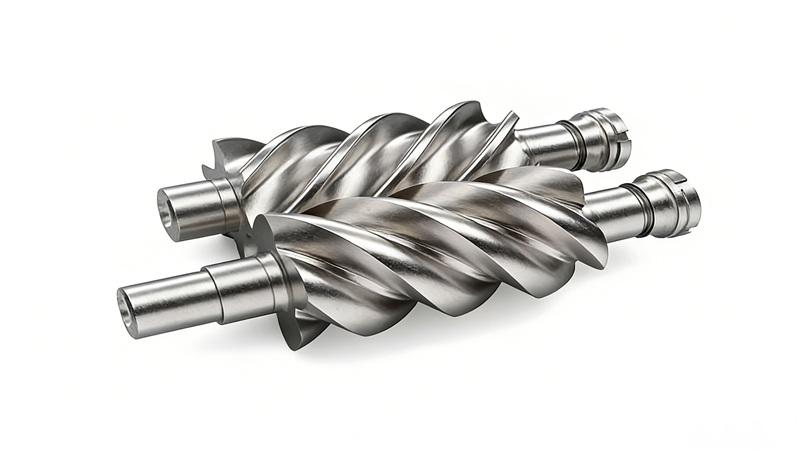
The rotors reduce the air volume as they turn. This compression process increases pressure until the air exits through the discharge port. The design provides steady flow, good efficiency, and less heat than piston compressors.
Most rotary screw compressors use oil injection for cooling, sealing, and lubrication. Oil-free models are also available when clean compressed air is required.
Key advantages:
- High capacity, often 10–500+ CFM
- Reliable for continuous 24/7 operation
- Suitable for industrial applications and high air demand
- Variable speed drive options improve energy efficient performance
Limitations:
- Higher cost than smaller compressor types
- Oil injected units require oil and filter maintenance
- Service and equipment complexity is greater than scroll units
Screw Compressor vs Scroll Compressor: Side-by-Side Comparison
Scroll compressors use two spiral scrolls to compress air in shrinking pockets. Rotary screw compressors use two meshing rotors that trap and compress air as they turn.
Scroll units produce about 2 to 15 CFM and usually run at 90 to 120 PSI. Rotary screw compressors deliver far more capacity, often 10 to 500+ CFM, with stable pressure and steady flow.
Scroll compressors work best for light, intermittent use. Rotary screw compressors support continuous 24/7 operation in industrial environments.
Noise levels also differ. Scroll compressors run quietly at about 70–75 dB. Rotary screw units typically operate around 80–85 dB.
Maintenance and cost vary as well:
- Scroll compressors are usually oil free and require minimal service
- Rotary screws need oil and filter maintenance in many systems
- Scroll units cost less upfront but have limited capacity
- Screw compressors cost more but offer better efficiency for high air demand
Application-Based Selection Guide
When to Choose a Scroll Air Compressor
Scroll compressors are best suited for environments where clean, quiet compressed air matters more than high capacity. Medical facilities, dental clinics, and laboratories often rely on this technology because it produces oil-free air and eliminates the risk of oil carryover. That level of air quality is important when compressed air comes into contact with instruments or sensitive equipment.
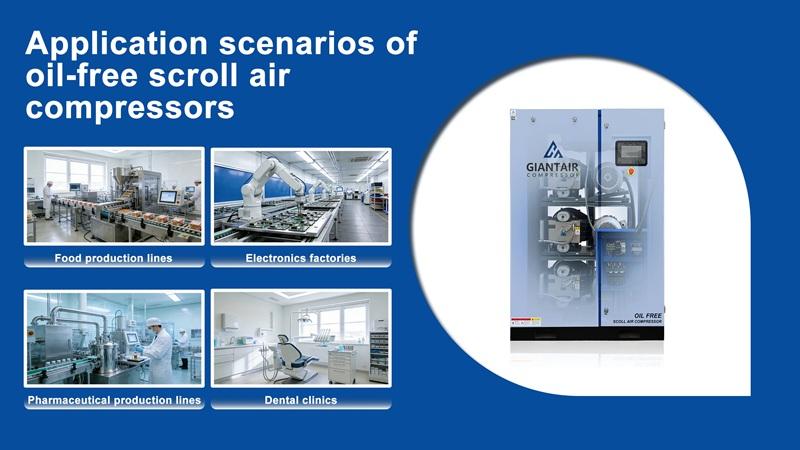
Several characteristics make scroll compressors attractive in these settings:
- Oil-free compressed air with no contamination risk
- Quiet operation around 70–75 decibels
- Simple design with minimal maintenance
In addition, scroll compressors are designed for moderate and predictable air demand. Most units deliver between 2 and 15 CFM, which makes them suitable for clinics, small laboratories, and light industrial equipment.
However, they are not intended for heavy production environments. Scroll technology works best when compressed air is needed intermittently rather than during continuous 24/7 industrial operation.
When to Choose a Rotary Screw Compressor
Rotary screw compressors are best for manufacturing plants and industrial facilities that need reliable compressed air all day. These machines support continuous 24/7 operation and handle demanding production environments better than scroll compressors.
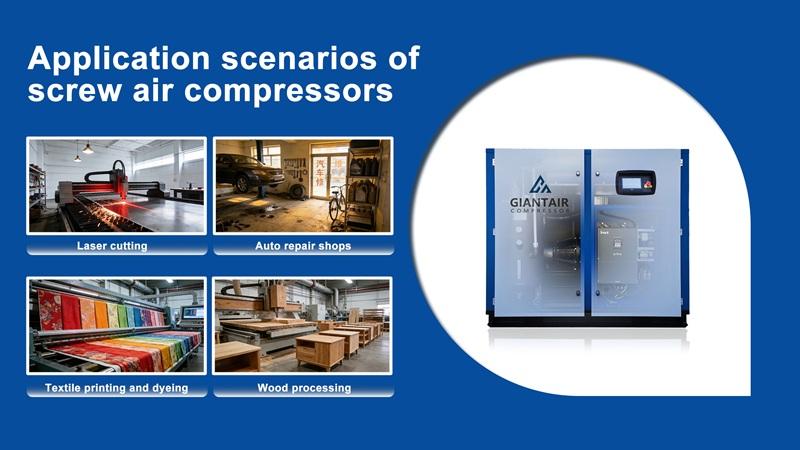
Industrial processes often require much higher air capacity. Rotary screw compressors typically produce between 10 and 500+ CFM, making them suitable for equipment lines, pneumatic tools, and large industrial systems.
Key advantages in industrial settings include:
- Reliable continuous operation for production lines
- High CFM capacity for large air demand
- Consistent pressure and steady compressed air flow
Rotary screw compressors also work well in centralized compressed air systems. One unit can supply multiple machines across a facility while maintaining stable pressure.
Many systems also include variable speed drive technology, which adjusts compressor output as air demand changes. This improves energy efficiency and helps reduce operating costs in facilities where compressed air runs constantly.
Oil-Free Considerations: Scroll vs Oil-Free Screw
Oil-free compressors are essential where air purity matters, such as medical, laboratory, and pharmaceutical applications. Both scroll and oil-free screw compressors eliminate oil carryover, but their design and cost differ.
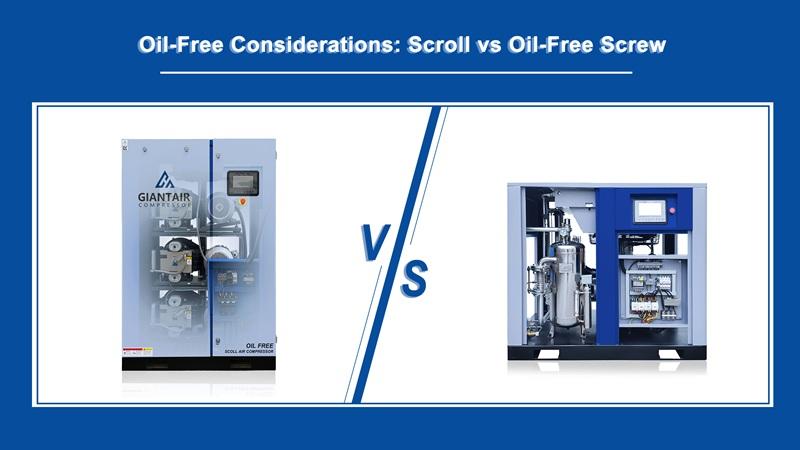
Scroll compressors are inherently oil-free, producing clean air without additional filtration. They generate zero oil carryover and require minimal maintenance, making them ideal for clinics, labs, and research facilities.
Oil-free screw compressors also provide clean air for industrial use but need more complex cooling to replace lubrication. They cost more upfront than oil-injected models and may be slightly less energy efficient.
Key points:
- Scroll compressors: zero oil carryover, low maintenance, quiet operation, ideal for low to moderate CFM
- Oil-free screw compressors: high CFM, clean air, more complex cooling, higher initial cost
- Oil-injected screws: risk of contamination, require air dryers and filters
In short, choose scroll for quiet, low-demand, high-purity applications, and oil-free screw for high-capacity industrial systems needing clean air.
How to Choose the Right Compressor for Your Facility
Start by evaluating your facility’s air demand and duty cycle. Scroll compressors handle low to medium demand (2–15 CFM) and intermittent use, while rotary screw compressors deliver 10–500+ CFM for continuous 24/7 operation. Matching capacity to actual demand prevents wasted energy or production bottlenecks.
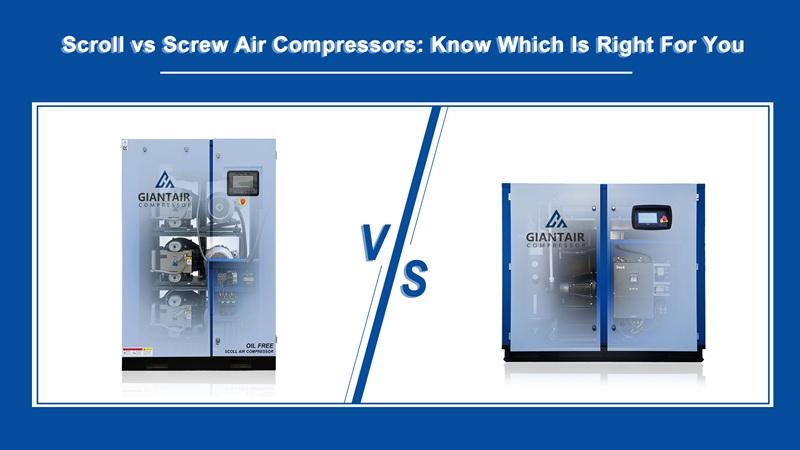
Consider installation space, ambient conditions, and noise levels:
- Scroll compressors: compact, low heat, 70–75 decibels for quiet environments
- Rotary screw compressors: need ventilation, higher heat, 80–85 decibels, suited for industrial plants
Finally, factor in cost and maintenance. Scroll compressors require minimal upkeep, while oil-injected screws need regular oil and filter changes. Variable speed drives on screw compressors improve energy efficiency and reduce long-term costs.
Final Decision: Which Compressor Technology Is Right for You?
Choosing between scroll and rotary screw compressors ultimately depends on your air demand, operating conditions, and long-term cost priorities.
If your operation requires quiet, clean, and low-maintenance performance, scroll compressors are a reliable solution for small to medium applications. For continuous, high-demand industrial environments, rotary screw compressors provide the power, efficiency, and durability needed to keep production running 24/7.
In many cases, a hybrid system combining both technologies can deliver the best balance of efficiency, flexibility, and reliability—especially in facilities with fluctuating air demand.
👉 Not sure which system fits your operation?
At GiantAir, we help manufacturers evaluate real working conditions, not just specifications. Our experts can recommend the most cost-effective and reliable compressor solution tailored to your industry.
👉 Get a free consultation or system recommendation today!
👉 Talk to our engineers and optimize your compressed air system with confidence!