

Compressed air is essential to modern manufacturing, powering everything from automation and packaging to food processing and pharmaceutical production. Yet the moisture carried within that air can quietly damage equipment, contaminate products, and disrupt operations if it is not properly controlled.
Understanding pressure dew point is the key to managing this risk. By learning how pressure dew point works and how it differs from atmospheric dew point, engineers, technicians, and facility managers can better interpret dew point values, select the right air dryers, and maintain reliable, high-quality compressed air throughout their systems.
What Is Dew Point?
The dew point temperature is the point is the temperature at which water vapor in air changes into liquid form. When air cools to this level, the air can no longer hold the maximum amount of moisture, and condensation begins.

- Water vaporcondenses into liquid form when air temperature drops below its dew point
- Dew point depends on humidity, air temperature, and pressure
- Higher moisture content means a higher dew point temperature
- Lower humidity leads to drier air and a lower dew point
How Dew Point Forms in Air
Dew point forms when air reaches its water vapor saturation pressure, the maximum amount of vapor the air can hold at a given temperature. When air cools or pressure increases, the gas changes behavior and moisture begins to condense.
How dew point develops:
- Air contains water vapor from atmospheric air and humid air conditions
- As air temperature falls, the vapor reaches saturation
- Excess moisture turns into water droplets or condensed water
Role of humidity and moist air:
- Relative humidity shows how close air is to saturation
- Moist air with high humidity has a higher dew point
- Dry air has a lower dew point and less condensation risk
Why humid air releases moisture when cooled:
- Cooling reduces air’s capacity to hold water vapor
- Vapor condenses into droplets
- This condensation creates moisture inside compressed air systems
Why Dew Point Matters in Industrial Systems
In compressed air applications, dew point is critical because moisture can damage equipment and reduce product quality. If pressure dew point is not controlled, condensed water forms inside compressed air lines and systems.
Impact on equipment:
- Moisture causes corrosion in air lines, valves, and pipes
- Condensed water damages air compressor components
- Sensors and pneumatic tools may fail
Risks to operations and product quality:
- Water droplets contaminate food and pharmaceutical industries
- Paint, coating, and packaging processes suffer defects
- Sensitive compressed air applications require dry compressed air
Key goals of managing dew point:
- Protect equipment from corrosion
- Maintain consistent product quality
- Reduce operating costs and downtime
- Control moisture across compressed air systems
Atmospheric Dew Point vs Pressure Dew Point
| Factor | Atmospheric Dew Point | Pressure Dew Point |
|---|---|---|
| Definition | Dew point temperature measured at normal atmospheric pressure | Dew point measured inside compressed air systems at operating pressure |
| Pressure Condition | About 14.7 psi (atmospheric pressure) | Measured at system pressure after air compression |
| Air Type | Atmospheric air before compression | Compressed air in pipelines and equipment |
| Moisture Behavior | Shows moisture content in ambient air | Shows condensation risk inside compressed air lines |
| Measurement Purpose | Weather, HVAC, storage environments | Industrial compressed air quality control |
| Effect of Pressure | No pressure change involved | Pressure increases reduce air’s ability to hold water vapor |
| Condensation Risk | Occurs when ambient air cools | Occurs when compressed air cools below pressure dew point |
| Typical Applications | HVAC design, weather forecasting, environmental monitoring | Air dryers selection, compressed air systems design |
| Measurement Tools | Hygrometers, weather instruments | Dew point meters installed in compressed air line |
| Impact on Equipment | Minimal industrial impact | Prevents corrosion, condensed water, and equipment damage |
| Impact on Product Quality | Not directly related | Critical for food and pharmaceutical industries and sensitive compressed air applications |
Why Pressure Dew Point Is Critical in Compressed Air Systems
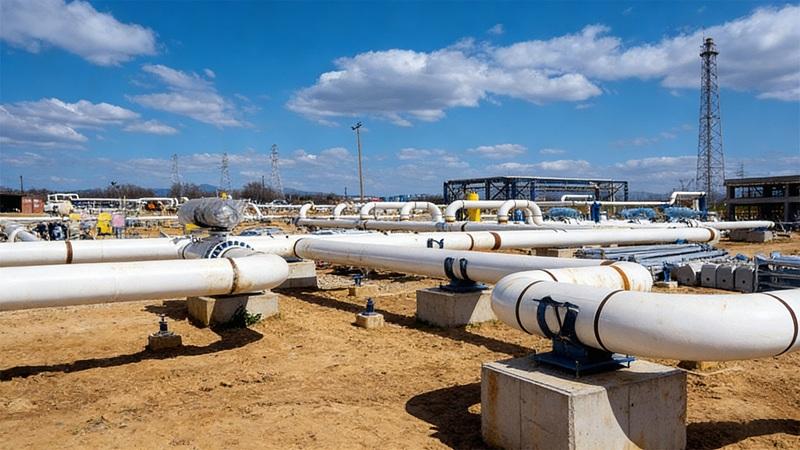
In compressed air systems, moisture control is essential for reliability and consistent performance. The pressure dew point shows when water vapor in compressed air will condense under operating pressure. If this value is too high, condensed water can form inside air lines, equipment, and tools, leading to corrosion, failures, and reduced product quality.
Equipment Protection
When compressed air cools below its pressure dew point, water vapor condenses into liquid form. This moisture can damage equipment across the system.
Corrosion in air lines and valves
- Rust forms inside pipelines and fittings
- Valve seals degrade faster
- Flow control becomes unreliable
Damage to air compressor components
- Moisture affects bearings and internal parts
- Sensors and controls fail due to water exposure
- Increased wear reduces compressor life
Condensation causing failures
- Water droplets block pneumatic tools
- Condensed water affects filters and regulators
- Unexpected downtime in compressed air systems
Product Quality Protection
Moisture in compressed air can directly affect production results. Many compressed air applications require clean, dry air to maintain product quality.
Food and pharmaceutical industries
- Moisture contamination can affect safety and standards
- Packaging integrity may be compromised
- Clean compressed air is critical
Electronics, painting, and packaging
- Water vapor causes coating defects
- Electronics assembly may be damaged by condensation
- Packaging lines need dry compressed air
Maintaining end product quality
- Prevents stains, corrosion marks, or contamination
- Ensures consistent manufacturing results
- Supports compliance with quality standards
Cost and Efficiency Impact
Poor dew point control increases operating costs and energy use across compressed air systems.
Higher operating costs and downtime
- Equipment repairs from corrosion
- Production interruptions due to moisture problems
- Increased maintenance labor
Energy efficiency improvements with proper control
- Dry compressed air reduces pressure losses
- Efficient air dryers lower energy consumption
- Stable system pressure improves performance
Reduced maintenance and energy consumption
- Fewer part replacements
- Longer equipment life
- Lower total energy costs over time
How Pressure, Temperature, and Humidity Affect Dew Point
The dew point temperature in compressed air systems depends on three key variables: pressure, temperature, and humidity. These factors determine how much water vapor air can hold before condensation begins.
Effect of Pressure on Dew Point
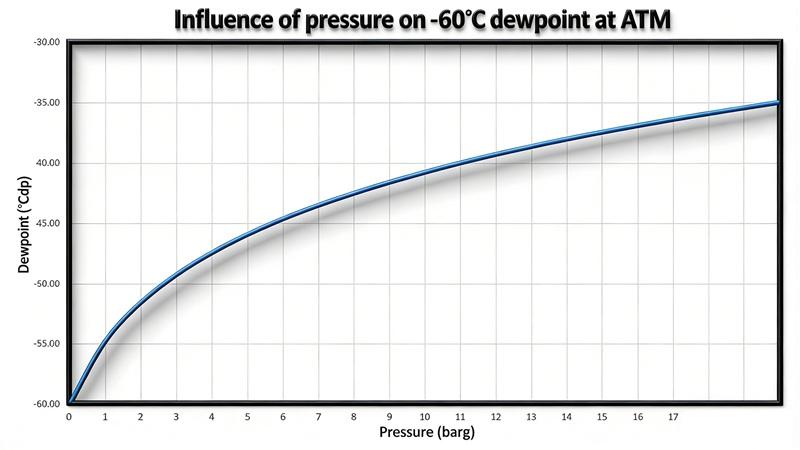
When air compression occurs, the volume of air decreases but the water vapor content stays the same. This change increases the concentration of moisture, which affects the pressure dew point.
How pressure affects dew point:
- Air compression packs water vapor into a smaller space
- Higher pressure reduces air’s ability to hold moisture
- Pressure dew point rises as operating pressure increases
- If compressed air cools below this level, water vapor condenses
Gas behavior explanation:
- Compressed air behaves like any gas under pressure
- The maximum amount of vapor air can hold depends on pressure and temperature
- When pressure changes downstream in air lines, moisture may condense into water droplets
Effects of Temperature
Temperature strongly influences dew point because cooler air cannot hold as much water vapor. When compressed air cools, condensation becomes more likely.
How temperature affects dew point:
- Cooling reduces air’s moisture capacity
- Water vapor condenses into liquid form
- Condensed water appears inside compressed air lines
Special case: frost point
- In low-temperature systems, moisture freezes instead of condensing
- The frost point shows when ice forms in pipelines
- Freezing can block valves, regulators, and filters
Pipeline temperature changes:
- Air leaving an air compressor is warm and humid
- As air travels through pipes, it cools
- Temperature drop can push air below its pressure dew point
Role of Humidity
Humidity measures how much water vapor is present in atmospheric air before air compression. It directly affects the starting dew point of compressed air systems.
Relative humidity and moist air:
- Relative humidity shows how close air is to saturation
- Moist air with high humidity has higher dew point
- Dry air has lower dew point and less condensation risk
Seasonal humidity changes:
- Summer or rainy conditions bring humid air into compressors
- Higher humidity raises moisture content in compressed air
- Systems may need more drying capacity during humid periods
Impact of incoming atmospheric air:
- Compressors draw in atmospheric air with varying moisture levels
- High humidity increases pressure dew point inside the system
- Without proper air dryers, condensation forms in air lines
Dew Point Measurement in Compressed Air Systems
You cannot control moisture in compressed air systems unless you first measure dew point accurately. Dew point measurement shows how much water vapor is present and when condensation may occur under operating pressure.
Tools Used for Dew Point Measurement
Several instruments are used to measure dew point in compressed air. Each tool works differently, but all help determine moisture content and pressure dew point.
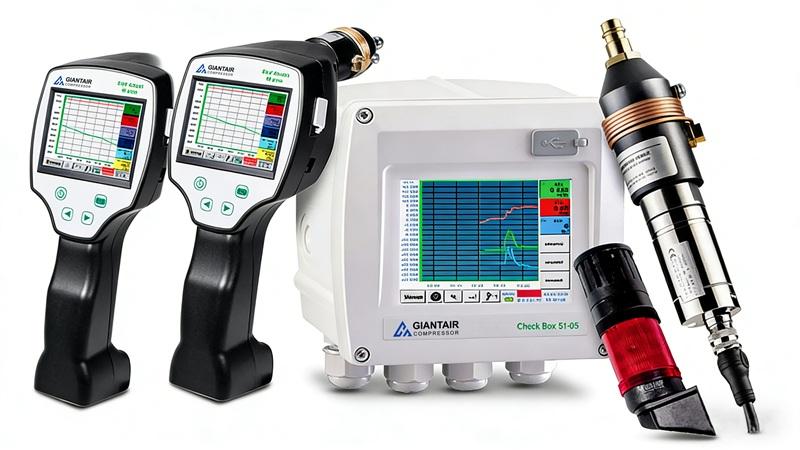
- Directly measure dew point temperature
- Provide accurate readings in compressed air line conditions
- Often used for continuous dew point monitoring
- Measure relative humidity in air
- Calculate dew point from humidity and air temperature
- Useful for atmospheric air or basic system checks
- Use wet and dry bulb temperature readings
- Estimate humidity and dew point
- Common in HVAC or environmental testing
Where to Measure Dew Point
The location of dew point measurement is critical. Measuring at the wrong place can give misleading results about moisture levels inside compressed air systems.
Compressor outlet
- Shows moisture level entering the system
- Indicates humidity in incoming atmospheric air
- Helps evaluate air compression effects
After air dryers
- Confirms dryer performance
- Ensures pressure dew point meets required standards
- Detects dryer failure early
End-use measurement point
- Shows actual air quality at equipment
- Detects condensation risk in air lines
- Important for food and pharmaceutical industries
How Compressed Air Dryers Control Dew Point
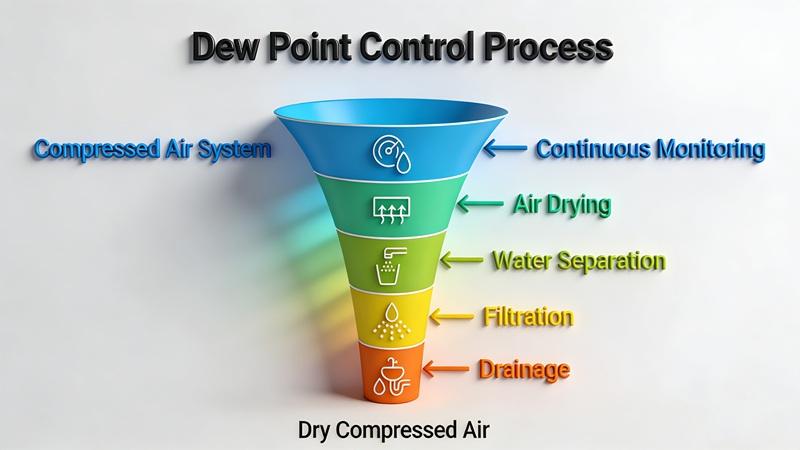
Compressed air dryers are designed to remove moisture before it can condense inside compressed air systems. By lowering the pressure dew point, these air dryers reduce water vapor content and help maintain dry compressed air throughout air lines, equipment, and production processes.
Refrigerant Dryers
Refrigerant dryers are one of the most common compressed air dryers used in industrial systems. They cool compressed air until water vapor condenses into liquid form, which is then separated and drained.
- Typical pressure dew point of about +3°C
- Suitable for moderate compressed air applications
- Cost-effective and energy efficient for general use
- Remove moisture by cooling air below its dew point temperature
Best used for:
- General manufacturing environments
- Pneumatic tools and equipment
- Facilities without very low temperature requirements
Desiccant Dryers
Desiccant dryers use special drying materials that absorb water vapor from compressed air. They achieve much lower pressure dew point levels than refrigerant dryers.
- Dew point range of −20°C to −70°C
- Ideal for critical compressed air applications
- Maintain very low moisture content
- Protect equipment in cold environments
Best used for:
- Food and pharmaceutical industries
- Electronics manufacturing
- Outdoor compressed air lines exposed to low air temperature
Membrane Dryers
Membrane dryers remove moisture using selective membranes that allow water vapor to pass through while keeping compressed air inside the system.
- Compact and simple design
- Suitable for smaller systems
- Work well with lower flow rates
- Require minimal maintenance
Best used for:
- Laboratory compressed air systems
- Small production units
- Point-of-use drying applications
Choosing the Right Dryer
Selecting the correct compressed air dryer depends on system needs, operating conditions, and desired dew point temperature.
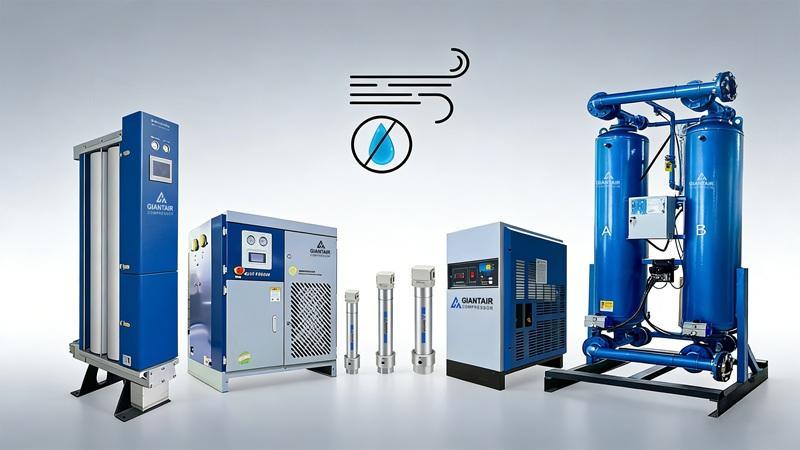
Factors to consider:
Required pressure dew point temperature
- +3°C for general use
- −20°C to −70°C for critical applications
System pressure and air temperature
- Higher pressure affects pressure dew values
- Cooling in air lines may cause condensation
Energy costs and efficiency
- Different air dryers have different energy consumption levels
- Efficient dryers reduce operating costs over time
Application requirements
- Sensitive compressed air applications need drier air
- Outdoor or cold environments require lower dew point
Risks of Poor Dew Point Control
If pressure dew point is not controlled in compressed air systems, excess moisture can condense inside air lines and equipment. This leads to corrosion, freezing, contamination, and costly downtime.
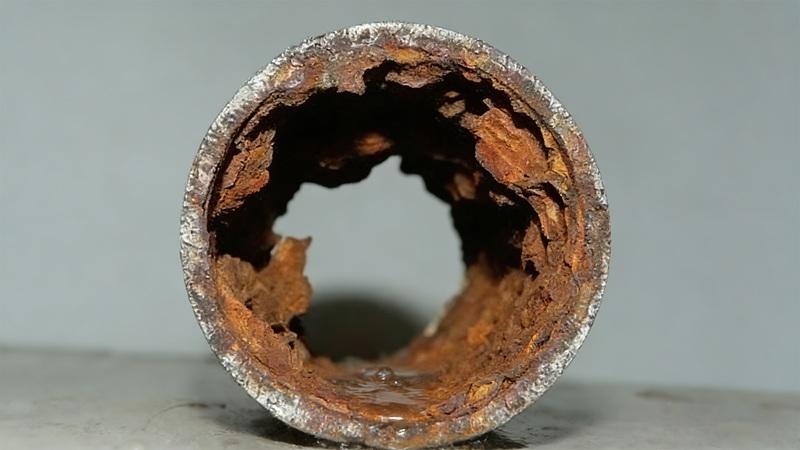
Corrosion and Equipment Damage
When compressed air cools below its pressure dew point, water vapor condenses into liquid form and collects inside pipelines and components.
Condensed water in pipelines
- Moisture accumulates in compressed air line sections
- Filters clog and separators overload
- Regulators and sensors malfunction
Rust and valve failure
- Corrosion weakens air lines and fittings
- Valve seals wear faster
- Air compressor components lose efficiency
Long-term effects
- Increased maintenance and operating costs
- Reduced equipment lifespan
- Unexpected production stoppages
Freezing and Blockages
In cold environments, moisture can freeze instead of condense, creating ice inside compressed air systems.
Ice formation in air lines
- Outdoor or refrigerated facilities are vulnerable
- Ice blocks valves, regulators, and small passages
- Pneumatic tools stop working
Frost point issues
- Frost point shows when moisture freezes
- Extremely low pressure dew point is required in cold climates
- Desiccant air dryers are often necessary
Product Contamination
Moisture in compressed air can directly affect end product quality, especially in sensitive compressed air applications.
Moisture in packaging or coating
- Paint and coating defects
- Packaging seal failures
- Surface stains and spotting
End product quality loss
- Contamination in food and pharmaceutical industries
- Damage to electronics and precision parts
- Inconsistent production results
Best Practices for Managing Pressure Dew Point
Maintaining the correct pressure dew point requires more than installing an air dryer. These practical steps help control moisture content, protect equipment, and maintain reliable compressed air quality across all compressed air systems.
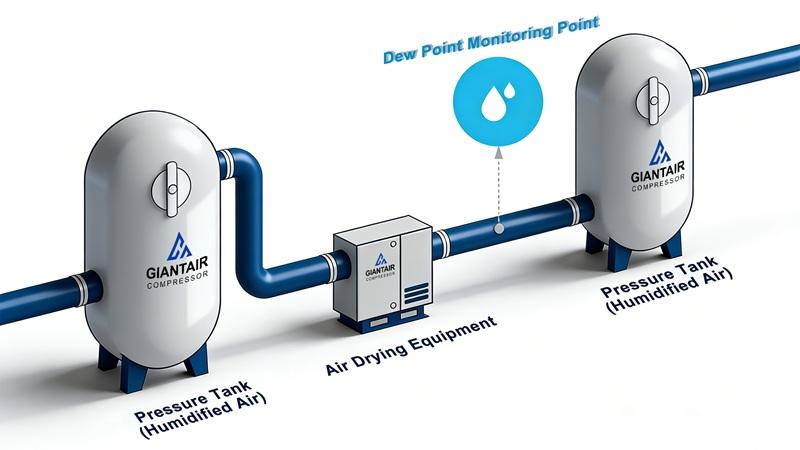
System Design Tips
Good system design reduces moisture problems before they start.
Use proper air dryers and filtration
- Select compressed air dryers based on required dew point temperature
- Install pre-filters and after-filters to remove oil, dust, and condensed water
- Match dryer capacity to system pressure and airflow
Install drain traps and separators
- Remove liquid water at compressor outlets and receivers
- Use automatic drains to prevent water buildup
- Place separators before air dryers for better efficiency
Insulate and route air lines correctly
- Insulated air lines prevent cooling below pressure dew point
- Avoid long runs through cold areas
- Slope piping to drain condensed water safely
Maintenance Tips
Regular maintenance ensures pressure dew point stays within target limits.
Check dew point regularly
- Measure dew point at key measurement points
- Compare readings with system specifications
- Watch for sudden changes in moisture content
Monitor sensors and instruments
- Calibrate dew point meters periodically
- Inspect pressure and air temperature sensors
- Replace faulty measurement devices quickly
Maintain dryers and filters
- Replace desiccant or filter elements as scheduled
- Clean condenser coils in refrigerant dryers
- Check drains, valves, and separators for blockages
Monitoring and Optimization
Continuous dew point monitoring helps detect problems early and improve energy efficiency.
Use continuous dew point monitoring
- Install inline dew point meters after air dryers
- rack moisture trends in compressed air systems
- Detect dryer failure before condensation occurs
Adjust pressure and temperature
- Maintain stable system pressure to control pressure dew
- Reduce unnecessary pressure drops in air lines
- Manage air temperature to prevent cooling below dew point
Maintain stable compressed air systems
- Fix leaks that cause pressure fluctuations
- Keep airflow balanced across the system
- Review system performance during seasonal humidity changes
Understanding pressure dew point is essential for keeping compressed air systems reliable, efficient, and safe. By measuring dew point accurately, selecting the right air dryers, and maintaining proper system design and monitoring, facilities can control moisture, protect equipment from corrosion, and maintain consistent product quality across all compressed air applications.
Interested in learning more about optimizing your compressed air systems? 👉 Get Distributor Price List today to speak with our experts.