Introduction
Air compressors consist of multiple parts. Not just a single machine. Each part plays a role in the full compressed air system. Internal components. Supporting equipment. All working together. Producing, storing, delivering pressurized air.
In industrial environments, issues like pressure drops, poor air quality, high energy use—rarely caused by one component alone. More often, system design, component interaction, and maintenance levels determine performance. Rotary screw compressors, reciprocating compressors, oil-free systems—all require a holistic understanding.
This guide lists key components. Explains the compression process. Shows how each part impacts efficiency, reliability, and overall operation.
How a Compressed Air System Works
A compressed air system converts ambient air into usable energy. This process begins when ambient air enters the compressor through the air filter. The air then moves through the compression chamber, where mechanical energy is converted into air pressure.
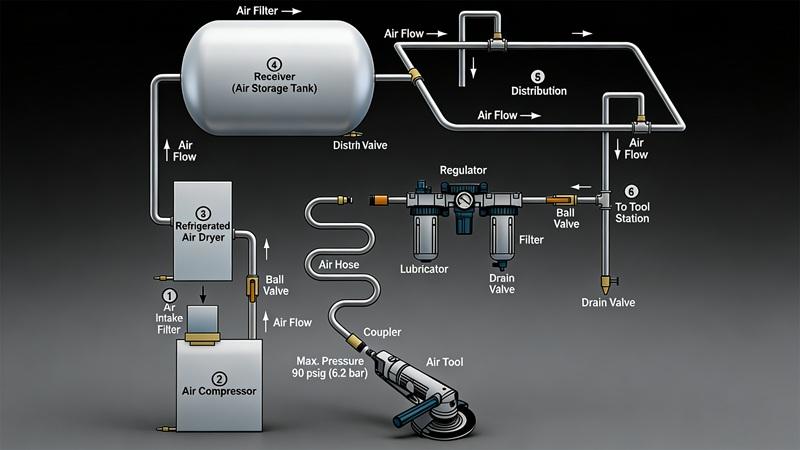
The air compression process involves several stages. First, incoming air is drawn into the system through the intake valve. Then, the compressor pump or compression element performs the actual compression. This can happen in piston compressors. Or rotary screw compressors. Also in other types. Single-stage compressors. Two-stage compressors.
Once compressed, the air becomes hot air due to the increase in pressure and temperature. It is then cooled through air coolers or a cooling system before entering the air receiver tank, where it stores compressed air for later use. This storage tank helps maintain a steady supply and correct pressure throughout the air system.
After storage, compressed air moves through air dryers. Then through line filter cartridges. Condensed water vapor is removed. Oil particles. Other contaminants. Each stage targets specific impurities. Air quality improves step by step. This process helps improve air quality and ensures compliance with industrial requirements.
Main Air Compressor Components and Their Functions
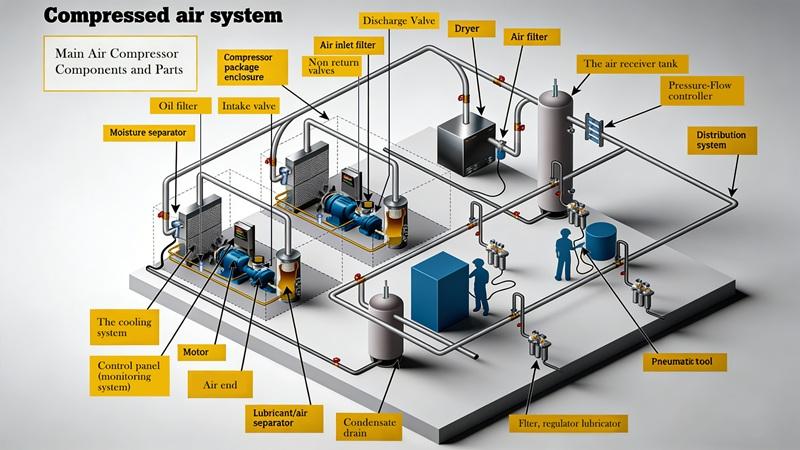
An air compressor has multiple essential components. The motor. The pump. The air tank. The pressure switch. Filters. Each has a specific role. In the compression process. In overall system performance.
Electric Motor
Air compressor motors can be electric. Or gasoline-powered. Electric motors are the most common in industry.
The electric motor drives the compressor pump or rotary screw element. Converts electrical energy into mechanical energy. Mechanical energy compresses the air. The motor size and efficiency directly affect energy consumption and overall system performance.
Air Filter and Intake System
The air filter is critical. Ensures only clean air enters the system. Without it, dust and particles can damage internal parts. Piston rings. Compressor elements. Valves.
The intake valve controls airflow into the compression chamber. Closes when the compressor is unloaded. The air filter and intake valve work together. Provide controlled, clean air intake.
If the inlet valve malfunctions, problems occur. Unstable air pressure. Reduced efficiency. System reliability is compromised.
Compression Chamber and Compressor Element
The compression chamber is where actual compression takes place. In piston compressors, a compressor pump uses a piston moving inside a cylinder to compress air. In rotary screw compressors, the airend uses two interlocking helical rotors to compress incoming air. The rotors do not contact each other, supporting stable operation and longer component life.
These rotary screw air compressors are widely used in industrial applications because they provide stable air flow and efficient operation. Oil injected compressors use compressor oil inside the chamber to provide lubrication, reduce heat, and improve sealing.
Discharge Valve
The discharge valve controls how pressurized air exits the compression chamber and enters the air system after compression, and also releases compressed air from the tank to the downstream piping system, playing a key role in maintaining correct pressure and preventing backflow or pressure loss.
Lubrication System and Oil Components
In oil lubricated systems, the lubrication system includes oil pumps, oil filters, and oil separators. It supplies oil to moving parts to provide adequate lubrication, reducing friction and wear while helping maintain performance and extend compressor life.
The air oil separator plays a critical role by separating oil from compressed air before it enters the air system. This reduces oil carryover and helps maintain air quality.
The oil filters, augmented by ISO certified filter cartridges, serve as a critical line of defense by further removing contaminants from the compressor oil while simultaneously ensuring thorough cleansing to prevent particulate matter from infiltrating and damaging sensitive internal components.
Oil free compressors, on the other hand, rely on alternative materials and coatings instead of compressor oil. These oil free systems are designed for applications where oil contamination must be avoided.
Cooling System and Heat Management
The cooling system is required to remove heat and ensure efficient operation, as air temperature rises significantly during the compression process. This may include air coolers or water-based cooling systems.
The cooling system prevents overheating that can damage components and reduce overall efficiency. Wth proper cooling, wear on internal parts is reduced, and the system can operate more reliably under continuous load while maintaining better energy efficiency.
Air Receiver Tank and Regulation system
The air receiver tank stores compressed air, maintains system pressure, and acts as a buffer to reduce pressure fluctuations, allowing the compressor to operate more efficiently while providing a steady supply to your tools or production line.
By storing compressed air, the system can handle peak demand without requiring the compressor to run continuously. This improves operational efficiency and reduces energy costs.
The regulation system controls air pressure from the tank, allowing the user to adjust and maintain the required output level for different pneumatic tools. At the same time, the safety valve releases air automatically if pressure exceeds safe limits, helping ensure stable and safe operation.
Pressure Control and Monitoring System
The pressure switch monitors the air pressure in the tank and maintains correct pressure levels in the system. It controls the motor by automatically starting and stopping the compressor based on air demand.
The monitoring system in an air compressor includes sensors, transmitters, and switches that track real-time pressure and temperature data. It is used to monitor pressure, temperature, and overall performance, helping ensure efficient operation and prevent system failure. The control panel relies on this system to enable performance monitoring, fault detection, and energy optimization, while the integration of IoT allows for remote access to system status, enhancing troubleshooting and maintenance.
Non return valves (check valves) are also important components. They prevent backflow of pressurized air, protecting the compressor and maintaining system stability.
Air Treatment: Filters and Dryers
After compression, air is treated to remove moisture, oil vapor, and particles. Air dryers remove condensed water vapor, while line filter cartridges and oil separators improve air quality. A drain valve is also used to discharge accumulated condensed water from the system during operation.
In industries with strict air quality standards, multiple filtration stages are required. These components help achieve clean air suitable for sensitive applications.
Types of Air Compressors and Their Components
Different compressor types use different internal components, but the overall system structure remains similar.
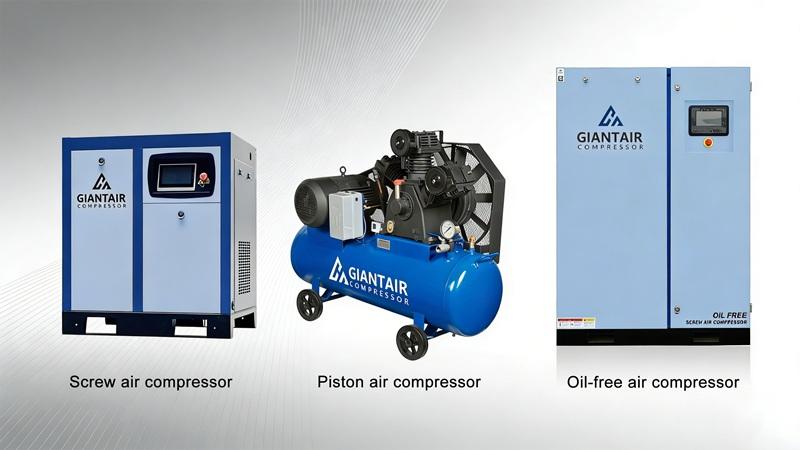
Rotary Screw Air Compressors
Rotary screw compressors use two interlocking helical rotors to compress air. They are known for continuous operation, reliable performance, and high efficiency. These compressors are commonly used in industrial applications requiring a steady supply of compressed air.
Piston and Reciprocating Compressors
Piston compressors, also known as reciprocating compressors, use a piston and cylinder to compress air. They are often used in smaller systems or applications requiring lower air flow.
Single stage compressors and two stage compressors are variations of piston compressors, offering different pressure levels and efficiency.
Oil-Free Compressors
Oil-free compressors include multiple types. Piston. Scroll. Water-lubricated. Dry-type. No oil is used during the compression process. These systems are ideal for applications requiring high air quality, such as food processing and pharmaceutical production.
Factors Affecting System Performance
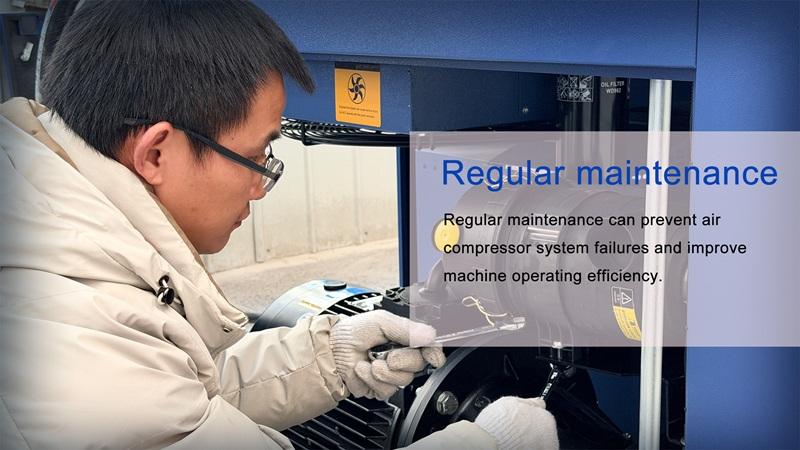
The performance of an air compressor system depends on how its components work together. Pressure drops can occur due to poor piping design, clogged filters, or inefficient components, and these losses increase energy consumption over time. Regular maintenance of motors and control systems is also important, since lack of maintenance can lead to breakdowns and reduced operational efficiency in actual operation.
Energy efficiency depends on cooling performance, lubrication, and pressure settings, but also on how the system is configured. In some cases, an oversized motor in an air compressor results in unnecessary energy consumption and higher operating cost, particularly when air demand does not match compressor output.
Air quality is another critical factor. Poor filtration can allow oil particles, moisture, and contaminants to enter the air stream, affecting equipment and product quality.
Why Understanding Air Compressor Parts Matters
Knowing the air compressor parts guide is important for ensuring optimal performance and long compressor life. Each component, from the air filter to the storage tank, plays a role in maintaining reliable operation.
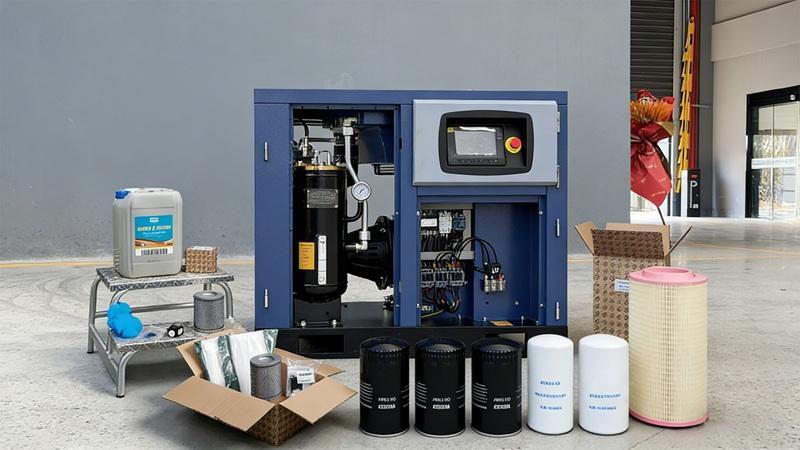
Regular maintenance routines, which include periodic filter replacements, oil changes, system monitoring, as well as the scheduled replacement of filters and separators, are essential for maintaining optimal air quality, preventing progressive damage to compressor components, and mitigating potential system failures.
By fostering a comprehensive understanding of the entire compressed air system’s operational mechanics, operators can more effectively troubleshoot issues and optimize performance. Furthermore, adhering to a disciplined maintenance schedule significantly reduces the frequency of unscheduled part replacements while substantially extending the overall service life and operational efficiency of the compressor system.
Organizations such as the International Organization for Standardization define air quality standards that require proper system design and maintenance. Meeting these standards ensures safe and efficient operation in industrial environments.
Conclusion
An air compressor is more than just a machine. It is a complete system made up of essential components that work together to produce and deliver compressed air. From the compression chamber and compressor element to the air receiver tank and air dryer, every part contributes to system performance.
Understanding the difference between compressor types, recognizing the role of each component, and maintaining the system properly are key to achieving efficient operation and reliable performance. Whether using rotary screw compressors, piston compressors, or oil free systems, a well-designed air system ensures long-term success.
👉 Need Help Optimizing Your Air Compressor System?
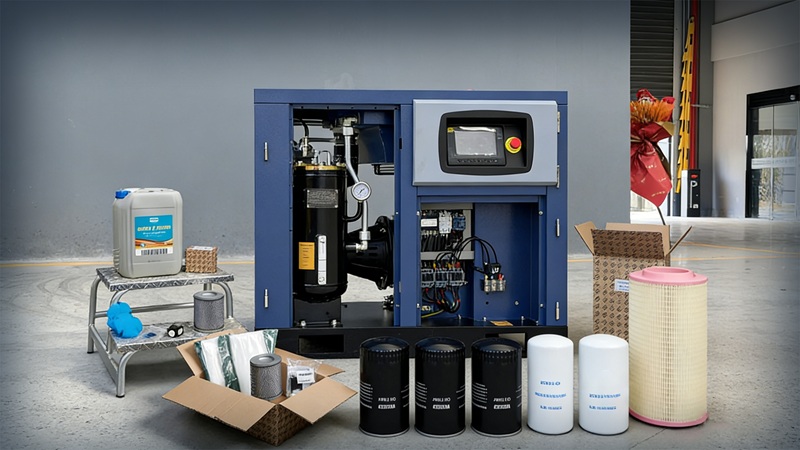
Selecting suitable air compressor components and maintaining the full system can be complex, particularly in industrial environments. In many cases, OEM or genuine parts are preferred, since they are manufactured to match the original compressor design and performance requirements.
Compared with aftermarket parts, these components typically provide more stable operation and lower failure risk. They also support compliance with safety standards and reduce operational risks. Overall, using original parts helps maintain consistent performance, product quality, and long-term system value.
At GiantAir, we help businesses design efficient compressed air systems, improve air quality, and reduce energy consumption. Whether you need rotary screw air compressors, oil free compressors, or complete system solutions, our team can provide expert support.
👉 Contact us today for a customized solution 👉 Optimize your system for maximum efficiency and performance