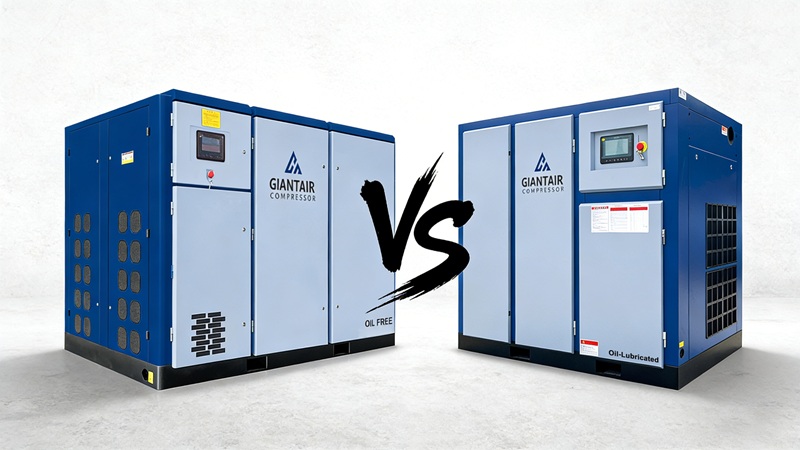
Choosing between an oil-lubricated and an oil-free air compressor can directly impact your production quality, maintenance cost, and energy efficiency.
If your application involves food processing, pharmaceuticals, or electronics, the wrong choice could lead to contamination risks and compliance issues. On the other hand, choosing an oil-free system when it’s not required may significantly increase your operating costs.
In this guide, we break down the key differences between oil and oil-free compressors, including air quality standards, lifecycle costs, and real-world applications, so you can choose the right system with confidence.
What Is an Oil-Free Air Compressor?
An oil free compressor is an air compressor designed to produce compressed air without oil inside the compression chamber. Unlike oil-lubricated compressors that rely on oil for cooling and sealing, oil free air compressors use special materials and engineering design to prevent oil contamination in the air stream. These oil free models are widely used where clean air and strict air quality principles are required, such as pharmaceutical production, food processing, and electronics manufacturing.
How Oil-Free Air Compressors Operate
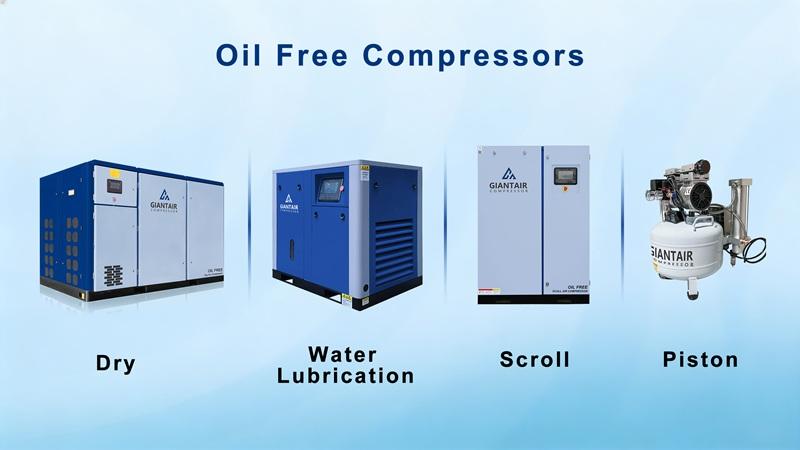
Oil free compressors or oiless compressors remove oil from the compression process while still protecting compressor part from wear and heat.
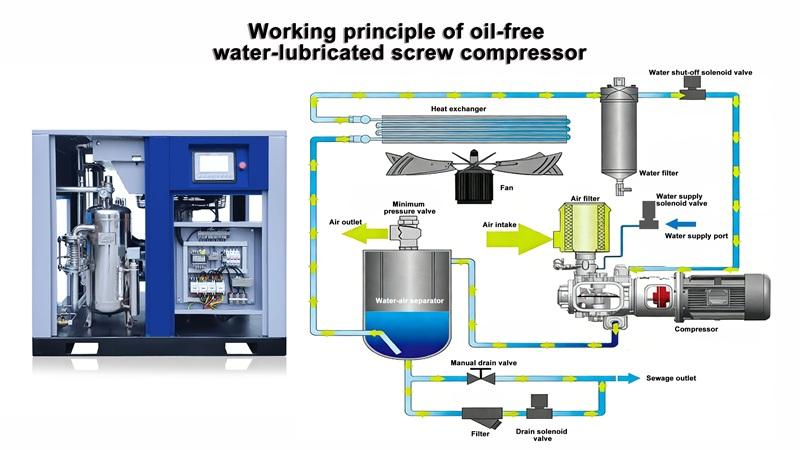
Oil-free air compressors compress intake air without introducing oil into the compression chamber. This helps eliminate oil carryover, reduces contamination risk, and prevents oil particles from entering the air system. Because the compressed air stays cleaner, oil-free air compressors are often used in applications where air purity is critical.
To protect compressor components from wear and heat, an oil free air compressor relies on alternative technologies instead of oil injection. Dry-running oil-free models often use coated piston rings or rotary screw elements to reduce friction during compression. Water-lubricated oil-free compressor designs use water to cool and seal the system while maintaining reliable operation.
Teflon coating or even ceramic play an important role in oil free compressor performance. These coatings help reduce friction, support stable airflow, and improve the life expectancy of an oil free compressor components without the need for oil-flooded operation.
Advantages of Oil-Free Compressors
Oil free compressor systems provide measurable benefits in applications where air purity and compliance are critical.
- Eliminates oil particles in the air
- Reduces the risk of product contamination
- Supports strict environmental regulations
- Provides a cleaner air stream
- Requires fewer downstream air filters
- Makes compliance with air quality requirements easier
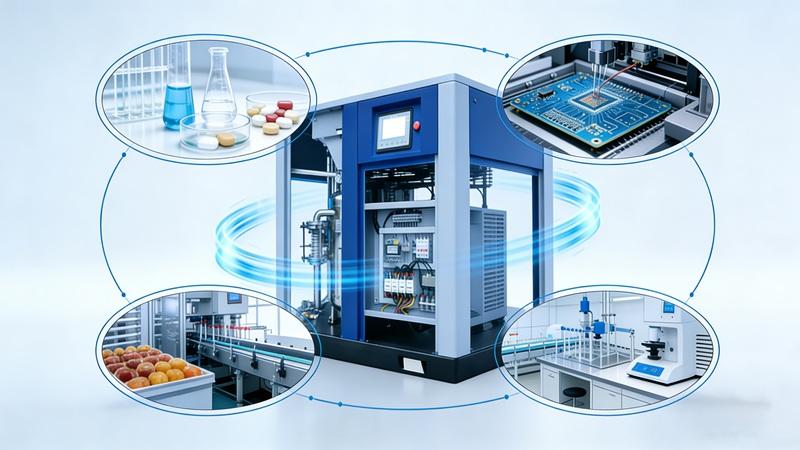
- Ideal for pharmaceutical production, food processing, electronics manufacturing, and laboratories
Limitations and Cost Considerations
Despite their benefits, oil free compressors or oilless compressor have practical trade-offs that should be evaluated carefully. The oil free design has its own limitations.
- Higher purchase price than many oil-based air compressors
- Precision engineering and specialized components increase overall cost
- Coatings and seals may wear faster without oil lubrication
- Filter replacements and regular inspections are especially important
- Improper maintenance can reduce system life expectancy
- Oil-lubricated compressors often manage heat more effectively
- Oil-free models may require more cooling and power in some applications
- Environmental impact and carbon footprint can vary depending on the system design
What Is an Oil-Lubricated Air Compressor?
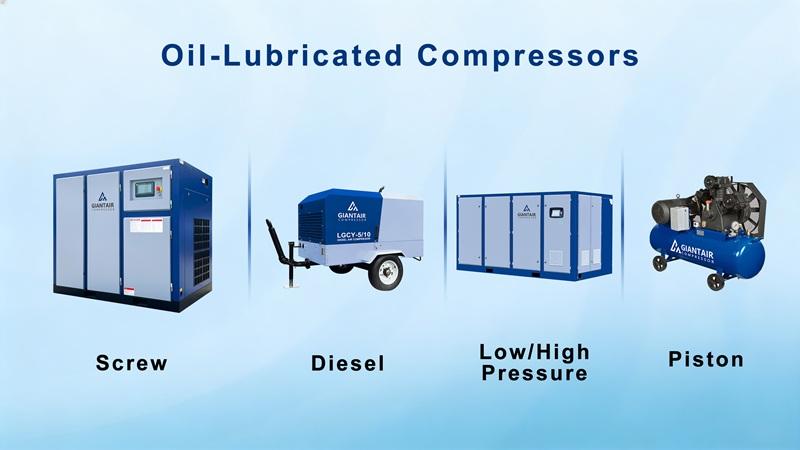
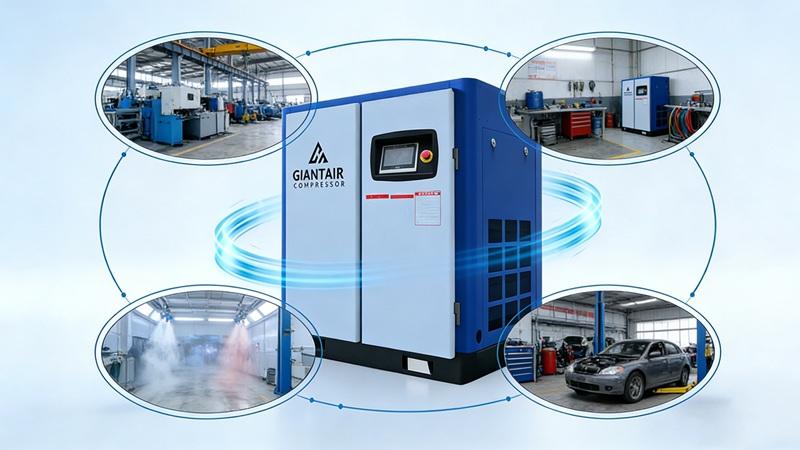
An oil-lubricated air compressor is a compressor that uses oil inside the compression chamber to reduce friction, cool internal parts, and seal gaps during air compression. These oil lubricated based compressors are widely used in industrial compressed systems because they improve durability, reduce heat buildup, and support reliable continuous operation. Oil lubricated air compressors are common in general manufacturing, automotive shops, and heavy-duty applications where very high air purity is not required.
How Oil-Injected Compressors Work
In oil injected compressors, oil is introduced directly into the compression chamber of a rotary screw or piston compressor.
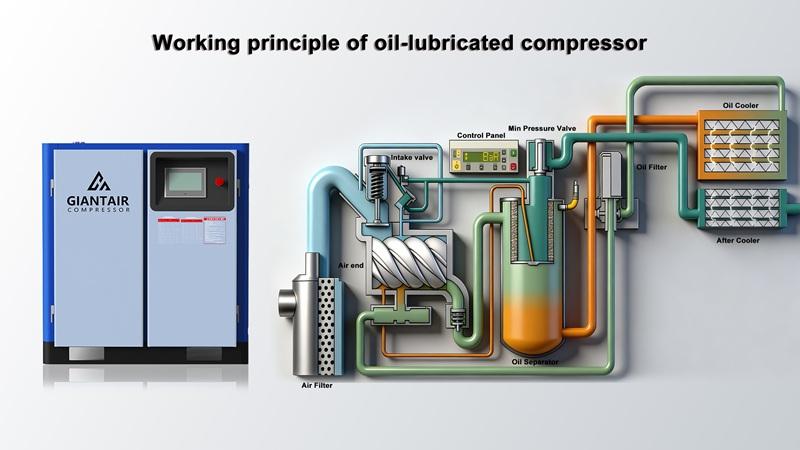
Oil air compressors work by introducing oil directly into the compression chamber during the compression process. In many oil lubricated air compressors, including rotary screw and piston chamber designs, the oil enters with the incoming air and helps protect internal parts during operation. This oil lube process gives moving parts adequate lubrication, reduces friction, and supports smoother performance in demanding air compressor applications.
In oil lubricated compressors, the compressor oil also helps cool and seal the system. As compressed air is generated, the oil absorbs heat created during compression and helps improve sealing between rotors, and cylinder walls. This allows oil lubricated air compressors to maintain stable air flow, support efficiency, and reduce heat more effectively under continuous use.
Before the compressed air enters the air stream and downstream lines, separator systems remove most of the compressors oil from the discharge. Any remaining oil particles are typically reduced further through filters and dryers. This is why oil injected compressors are widely used in industrial settings, although extra filtration may still be needed where air quality, air purity, and low oil contamination are important.
Advantages of Oil-Lubricated Compressors
Oil lubricated based compressors provide several operational advantages.
- Lower upfront cost than many oil-free compressor units
- Widely available across different compressor sizes
- Reduces heat effectively during operation
- Supports stable performance under heavy and continuous industrial loads
- Scheduled oil changes help protect internal components
- Durable designs, including cast iron and rotary screw systems, support long service life
- Offers strong life expectancy when properly maintained in industrial environments
Limitations and Contamination Risks
Despite their advantages, oil lubricated based compressors can introduce contamination of oil into compressed air if not properly filtered.
- Small amounts of oil particles may remain in the compressed pure air stream
- Air filters, dryers, and separators are required to reduce contamination risk
- Oil disposal adds to maintenance effort and cost
- Scheduled oil service is necessary for proper system performance
- In sensitive industries such as food industry, pharmaceutical production, and electronics manufacturing, contamination can damage products or violate air quality requirements
ISO 8573-1 Air Quality Standards Explained
Choosing an air compressor often depends on required air purity. ISO 8573-1 defines air quality classes for air systems.

The International Organization for Standardization (ISO) defines global standards for industrial and commercial use. These standards apply to many industries, including compressed air systems.
Compressed air quality is classified under ISO standards. Air purity depends on the number of particles per cubic meter and particle size. Based on these factors, compressed air is divided into different ISO classes, usually from Class 0 to Class 5.
The original ISO standard for compressed air (1991) was mainly developed for filter manufacturers. At that time, the standard defined five oil concentration classes. The highest level was Class 1.
Class 1 limits oil concentration to 0.01 mg/m³. This is measured at 1 bar(a), 14.5 psia, and 20°C (68°F). Air that meets this level is often described as a “technically oil-free solution.”
In 2001, the ISO standard was updated. Another revision followed in 2010. The current version defines limits for total oil content. This includes oil aerosol, liquid oil, and oil vapor.
A new requirement was also introduced for measuring oil vapor separately. This made the standard more accurate and easier to apply in real systems.
At the same time, a new classification was added. This is Class 0. It represents the highest air purity level. It is used in applications that require extremely clean compressed air.
- Class 0: No detectable oil contamination → pharmaceuticals, food industry, medical
- Class 1–2: Very clean compressed air → electronics manufacturing and laboratories
- Class 3–4: General industrial compressed air → oil compressors with air filters
Compressor Selection Checklist
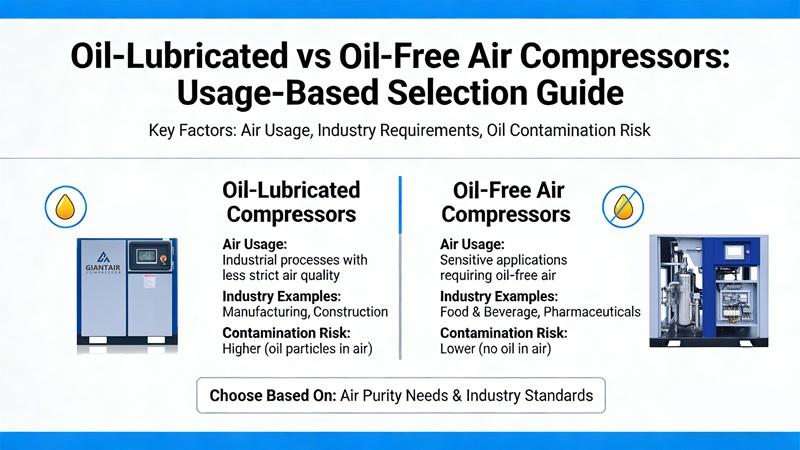
Use this checklist to decide between oil lubricated air compressors and oil less air compressor options.
1. Air Quality Needs
- Need Class 0 oil-free air? → Choose oil free air compressors
- Small concentration of oil acceptable with filters? → Oil lubricated compressor
2. Industry Type
- Food processing, pharmaceuticals, electronics → Oil less compressor
- General manufacturing or workshop air tools → Oil compressors
3. Duty Cycle
- Continuous heavy-load compressed air → Oil flooded rotary screw
- Light or intermittent clean air use → Oil free units
4. Budget and Operating Cost
- Lower upfront air compressor cost needed → Oil lubed compressor
- Willing to invest for clean air → Oil free air compressor
5. Maintenance Capability
- Can manage oil changes and oil disposal → Oil compressors
- Want no-oil maintenance → Oil less compressor
6. Contamination Risk
- Product contamination unacceptable → Oil free air compressor
- Minor oil carryover manageable → Oil lubricated air compressor
Hidden Costs and Risk Factors to Consider
When comparing oil-lubricated and oil-free air compressors, the initial purchase price is only one part of the total cost. Long-term expenses often come from filtration, maintenance, compliance, energy use, and the risk of contamination in sensitive applications.

Hidden Costs
Lifecycle costs can significantly affect the real total cost of ownership, especially in systems that require extra air treatment and maintenance.
- Additional air filters and dryers may be needed to reach required air purity levels
- Coalescing filters and activated carbon filters can add equipment and replacement costs
- Refrigerant or desiccant dryers may be required to maintain clean air supply
- Multiple filtration stages can create pressure drop and reduce airflow efficiency
- Higher pressure demands can increase motor load and energy consumption over time
- Frequent filter replacements and separator element changes add ongoing maintenance cost
- Routine monitoring of concentration of oil may be necessary in regulated environments
- Used oil and filter disposal can increase service and environmental management costs
Risk Factors
Operational and compliance risks can create added costs through downtime, rejected products, and stricter inspection requirements.
- Carryover of oil can affect packaging, coating, and other sensitive production lines
- Oil particles or oil vapor can damage electronics manufacturing processes
- Residue buildup may reduce the performance of pneumatic systems like valves and tools
- Failure to meet ISO 8573-1 air quality standards can lead to compliance issues
- Product rejection is possible in food processing and pharmaceuticals
- Contamination can result in lost batches, recalls, and production delays
- Environmental regulations may require stricter handling and documentation of oil service
- Air quality audits may involve testing, inspections, and possible shutdowns if standards are not met
- Higher energy use can increase both operating cost and carbon footprint over time
FAQ
Do Oil-Lubricated Compressors Always Contaminate Air?
Not always. Modern oil-lubricated compressors use separators and filters to reduce oil carryover, but trace oil vapor may still remain in the air.
Can Filtration Make Oil Compressors Safe for Food or Pharma Use?
Filtration reduces oil contamination but cannot guarantee Class 0 air. Oil-free compressors are usually a safer choice for food and pharmaceutical applications.
Which Compressor Is Better for a Small Workshop Using Air Tools?
Oil-lubricated compressors are typically better for small workshops due to lower cost and good durability for general air tool use.
Which Compressor Should a Food Packaging Plant Choose?
Oil-free compressors are preferred because they eliminate the risk of oil contamination and meet strict air quality requirements.
Are Oil-Free Compressors More Energy Efficient?
Not always. Oil-lubricated compressors can be more efficient under heavy loads, while oil-free models may require more energy depending on the system.
Do Oil-Free Compressors Require Less Maintenance?
They eliminate oil changes but still require regular servicing, including filters and component inspections.
Can Oil Carryover Damage Equipment?
Yes. Even small amounts of oil can damage sensitive equipment and affect product quality in certain applications.
Which Compressor Is Better for Continuous Industrial Production?
Oil-lubricated compressors are better suited for continuous heavy-duty operations due to better cooling and durability.
Choosing between oil lubricated and oil free air compressors comes down to your air quality needs, operating conditions, and long-term performance goals. Understanding how each air compressor works and how it affects maintenance, efficiency, and compressed air quality, helps you make a confident, reliable choice for your system.
At GiantAir, we help manufacturers choose the right compressed air system based on real operating conditions—not just specifications.
Whether you need oil-free air for sensitive production or a cost-efficient oil-lubricated system for heavy-duty use, our engineers can recommend the best solution.