Introduction
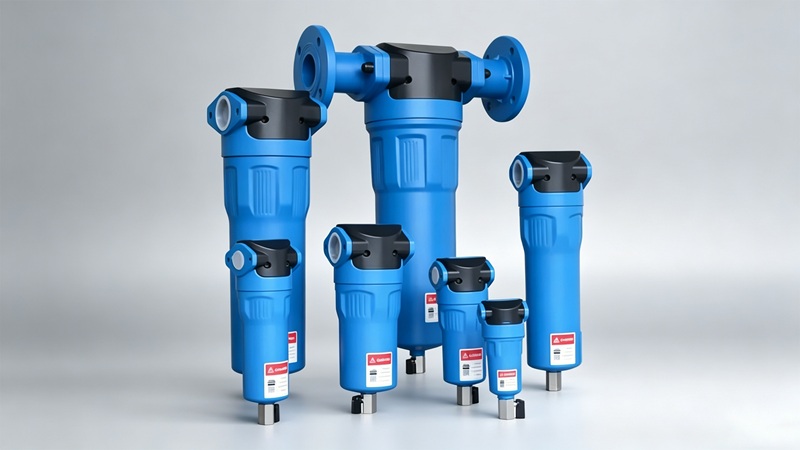
Compressed air filtration is essential for protecting equipment, maintaining air quality, and ensuring reliable performance in any compressed air system. Whether you operate an industrial production line, a workshop, or a precision process, compressed air often contains contaminants that must be removed before the air stream reaches downstream equipment.
Compressed air filtration is the process of removing contaminants such as dust, oil aerosols, water vapor, microbes, and other air contaminants from compressed air to meet air quality requirements and quality standards for different industrial applications. Without proper air filtration, contaminants can damage tools, reduce efficiency, increase maintenance costs, and compromise product quality.
This guide explains how compressed air filters work, the different types of filters available, common compressed air contaminants, filter grades, installation methods, and how to choose the right filtration setup for your system.
Why Compressed Air Filtration Is Important
Atmospheric air naturally contains dust, dirt particles, moisture, gas particles, and other contaminants. During compression, an air compressor can also introduce oil, water and oil aerosols, vapor molecules, and liquid contaminants into the compressed air system.
These contaminants create risks such as:
- Pipe corrosion and rust
- Pressure drop and energy loss
- Equipment wear and unexpected downtime
- Product contamination
- Higher maintenance costs
Removing contaminants protects downstream machinery and helps ensure clean air reaches the point of use.
For pneumatic systems, removing moisture and dirt protects delicate valves and cylinders from rust and blockage in pneumatic tools. In manufacturing processes, using the correct filtration methods protects end-product quality while reducing maintenance costs.
Industries with strict air quality requirements—such as food processing, pharmaceuticals, electronics, and CNC machining—depend on clean air. In CNC and plasma cutting applications, clean, dry air is essential for consistent cutting performance and preventing process defects.
Proper air preparation is also critical for the reliability and efficiency of pneumatic systems. Contamination can shorten equipment lifespan, increase maintenance costs, and reduce operational efficiency.
Compressed Air Filter Grades and Standards
Compressed air quality is commonly classified using International Organization for Standardization standard ISO 8573-1:2010. This standard defines compressed air purity classes based on the maximum permissible levels of:
- Solid particles
- Water condensate
- Oil content
ISO 8573-1:2010 defines nine compressed air quality classes, with lower class numbers indicating higher purity levels, helping industries specify and communicate air quality requirements more effectively.
This classification allows industries to define air quality requirements clearly and match filtration systems to the application.

Examples:
- General workshop air may require basic particulate filters and moisture control.
- Instrument air often requires lower particulate and oil levels.
- Food and pharmaceutical systems may require activated carbon filters and sterile filtration.
Selecting the proper filter grade prevents over-specification while ensuring contaminants are controlled.
Compressed Air Contaminants
Compressed air can contain millions of dirt particles, water, oil, and even heavy metals like lead, cadmium, and mercury if not properly filtered. Compressed air contaminants generally fall into three categories:

Dry Particulates
Particulates in compressed air include:
- Dust
- Dirt
- Pollen
- Loose metal fragments
- Rust particles
Compressed air can contain millions of dirt particles if not filtered properly.
These solid particles can damage filter media, block valves, wear components, and contaminate products,which can damage products and cause production delays.
Dry particulate filters are commonly used as a first stage to remove solid particles and larger particles from the air stream.
Aerosols
Aerosols are small droplets suspended in compressed air, often including:
- Water droplets
- Oil aerosols
- Water and oil aerosols
- Small droplets from lubricants
Coalescing filters are designed to remove liquid aerosols and particulates by forcing small droplets to combine into larger droplets that can be drained away.
This process relies partly on interception and brownian movementinside the filter element.
Aerosols can damage products and equipment if not removed properly.
Vapors
Vapors are gas-phase contaminants, including:
- Oil vapors
- Vapor molecules
- Other gas particles
- Chemical odors
Unlike aerosols, vapors are not liquid droplets. They often require adsorption filters using activated carbon or activated charcoal.
Activated carbon filters remove oil vapors and odor through adsorption at the carbon surface.
This is essential in high-purity applications.
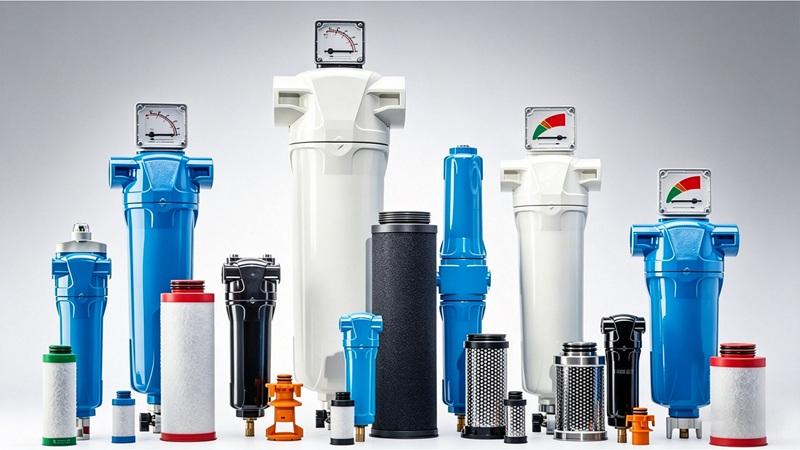
Different Types of Compressed Air Filters
Compressed air filtration systems use several types of filters designed for specific contaminants, and industrial systems typically apply them in series to gradually purify air, often placed after the air compressor or at the point of use.
Particulate Filters
Particulate filters remove solid particles such as dust, dirt, and rust.
They are often installed as the first stage in air filtration.
Their purpose is to:
- Remove solid particles
- Protect downstream filters
- Reduce contamination loads
Line filters of this type are common after air receivers.
Coalescing Filters
Coalescing filters remove:
- Water and oil aerosols
- Small particles
- Liquid contaminants
As compressed air passes through fine filter media, small droplets merge into larger droplets and drain out.
These filters are critical in oil injected air compressors, where lubricants can introduce aerosols into the air stream.
Mist eliminators can also be used as a lower-cost alternative to coalescing filters where a slight increase in pressure drop is acceptable.
Activated Carbon Filters
Activated carbon filters remove:
- Oil vapors
- Odors
- Vapor-phase hydrocarbons
These adsorption filters are widely used where very clean air is required, making them essential in applications such as food and pharmaceutical production.
Applications include:
- Food production
- Pharmaceutical processing
- Electronics
- Breathing air systems
High-Efficiency and Sterile Filters
These filters are used for specialized applications requiring microbial control or very high purity.
They are common in medical and pharmaceutical systems.
How Compressed Air Filtration Systems Work
Compressed air filtration usually uses a multi-stage process, with each filtration stage targeting different contaminants to improve air quality, protect equipment, and ensure the compressed air system performs efficiently.
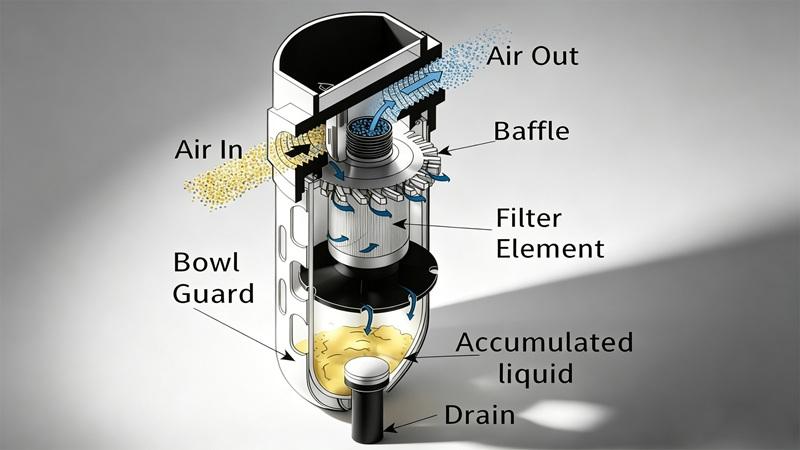
A common sequence is:
- Intake filters remove large debris before air enters the compressor, helping prevent damage to internal components.
- Centrifugal separators or moisture trap units remove larger liquid moisture droplets using rotational motion.
- Particulate filters remove dry particulates.
- Coalescing filters remove water and oil aerosols.
- Activated carbon filters remove oil vapors.
- Point-of-use filters provide final polishing.
Each stage targets different compressed air contaminants.
This staged approach is more effective than relying on a single filter element.
Industrial systems often place filters after the air compressor, after the dryer, and at point-of-use locations.
How to Choose the Right Compressed Air Filter
Choosing among different types of filters depends on several factors, including compressor type, contamination level, system pressure, flow requirements, and the air quality needed for the application. Evaluating these conditions helps determine the right filtration setup.
Compressor Type
Oil injected air compressors often need stronger aerosol and vapor control than oil-free systems.
Flow Rate and Pressure
Filter sizing should match system flow, often rated by cubic foot per minute.
Undersized filters can increase pressure drop and reduce efficiency.
Contamination Level
Consider:
- Dry particulates present
- Water vapor load
- Oil content
- Other contaminants in supply air
Higher contamination may require additional filtration stages.
Application Requirements
Different applications need different filtration levels:
- Workshops → basic particulate and moisture control
- Industrial processes → multi-stage air filtration
- Precision applications → coalescing plus activated carbon
Filter selection should match actual air quality requirements.
Where to Install Compressed Air Filters
Filter placement has a direct impact on system performance, air quality, and operating efficiency. Installing compressed air filters in the correct locations helps improve contaminant removal, reduce pressure drop, protect downstream equipment, and maintain stable system operation.
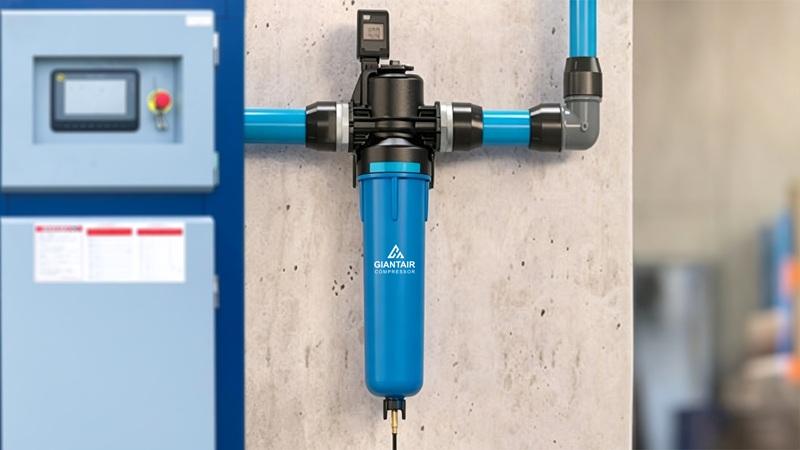
Typical installation points include:
After the Compressor
Primary line filters are often installed immediately after compression.
This protects downstream equipment.
After the Dryer
Post-dryer filters capture residual particles or oil.
Point-of-Use
Final filters are used near critical equipment.
This is common in food and pharma.
Before Other Filters
Water separators and centrifugal separators are often installed as a first stage to remove bulk liquid water from the air stream through centrifugal force before the air reaches other filters.
This reduces load on downstream filters.
When installing filters:
- Minimize piping bends before filters
- Use accessible service ports
- Provide drainage for liquid water removal
These practices help maintain flow and reduce pressure losses.
Compressed Air Filtration vs Dryers vs Separators
Compressed air filters, dryers, and separators perform different functions, and each addresses a different type of contamination in a compressed air system.
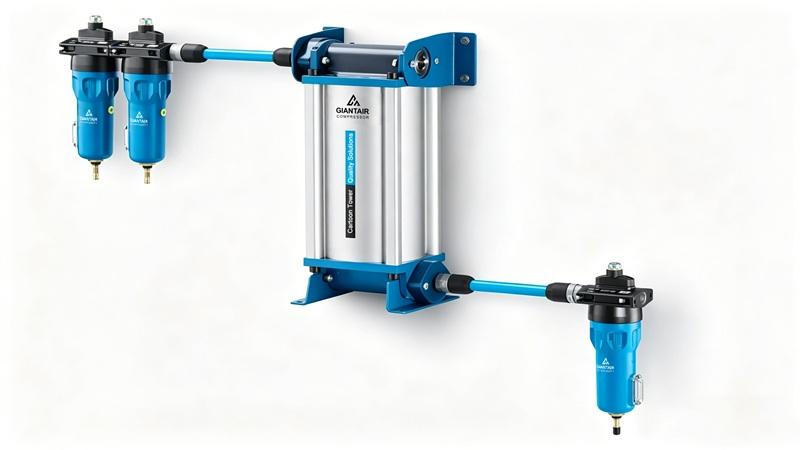
Filters
Filters remove:
- Solid particles
- Aerosols
- Vapors
Air Dryers
Dryers reduce moisture content and water vapor.
They do not replace particulate or vapor filters.
Moisture Separators
Separators remove larger droplets or bulk liquid water.
They are often the first stage.
In many systems, all three are required.
Common Problems in Compressed Air Filtration Systems
Pressure Drop
Clogged filters increase pressure drop.
This wastes energy and reduces system performance.
Proper filtration is meant to reduce contamination—not create excessive restriction.
Incorrect Filter Selection
Using the wrong filter media can leave contaminants untreated.
For example:
- Particulate filters cannot remove oil vapors
- Activated carbon cannot remove bulk water
Matching filter type to contaminant is essential.
Poor System Design
Poor sequencing or inadequate drainage can reduce filtration efficiency.
This may lead to costly downtime and repair costs.
Maintenance and Replacement of Compressor Filters
Proper filtration and periodic filter maintenance help prevent pipe corrosion, excessive pressure drops, and equipment damage, reducing costly downtime and unexpected repair costs.
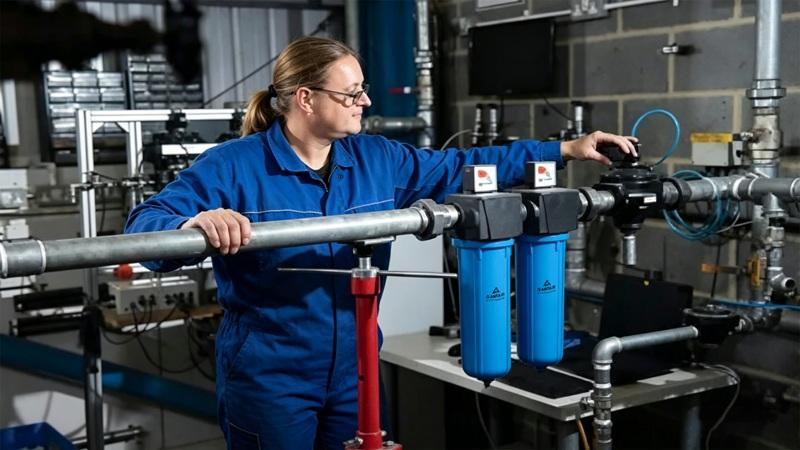
A common recommendation is replacing filter elements every 6 months, though intervals depend on:
- Supply air quality
- Operating hours
- Contamination levels
Signs of filter failure include:
- Rising pressure drop
- Reduced flow
- Moisture carryover
- Poor air quality
Differential pressure sensors help monitor when filters become clogged by measuring the pressure drop between supply and outlet pressure, indicating when filter replacement may be needed.
This provides a more reliable replacement indicator.
Best practices include:
- Monitor differential pressure
- Document filter change dates and reasons
- Inspect drains regularly
- Replace damaged filter elements promptly
Good maintenance protects efficiency and reduces maintenance costs.
Benefits of a Proper Filtration System
A well-designed compressed air filtration system delivers several benefits:
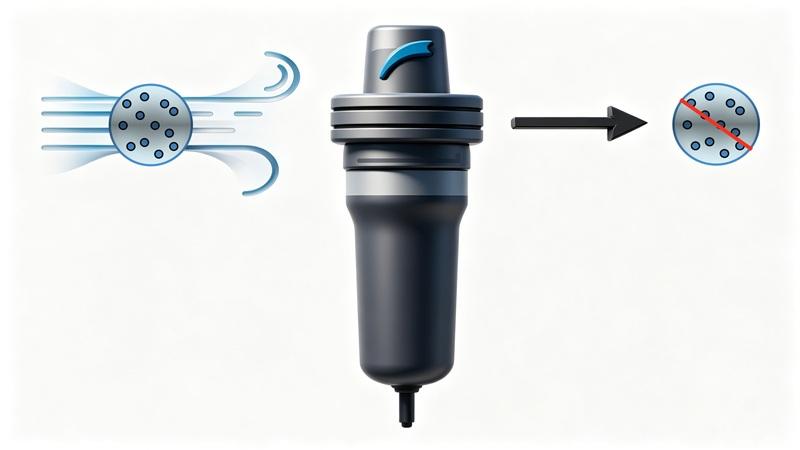
- Improved Air Quality:Removing contaminants improves clean air quality for sensitive applications.
- Reduced Equipment Wear:Clean compressed air protects tools, valves, and machinery.
- Lower Operating Costs:Lower contamination levels help reduce equipment failures, minimize downtime, and lower overall maintenance costs.
- Better Product Quality:Filtration helps prevent product contamination,this is especially critical in food, pharma, and electronics.
FAQ
What type of compressed air filter do I need?
It depends on compressor type, contaminants present, and required air quality.
How many filters are required in a system?
Many systems use multiple stages rather than one filter.
Can a filter remove moisture completely?
No. Filters remove droplets, but dryers are usually needed for vapor removal.
How do I reduce pressure drop in filters?
Use correct sizing, replace clogged filters, and optimize filter placement.
Conclusion
Compressed air filtration is essential for controlling particles, aerosols, vapors, and other compressed air contaminants that can affect equipment, product quality, and system reliability.
Using the right combination of particulate filters, coalescing filters, activated carbon filters, and separators helps remove contaminants, protect downstream equipment, and maintain clean air throughout the compressed air system.
By matching filter grades to air quality requirements, installing filters in the right locations, and maintaining filter elements regularly, you can improve efficiency, reduce pressure drop, and lower long-term maintenance costs.
If you are evaluating compressed air filters for your application, start by reviewing contamination sources, flow requirements, and purity targets—then build a filtration system designed for your process. Need help selecting the right solution? Contact our team for expert guidance or explore our compressed air filtration products to find the right fit for your system.