
Choosing the right air compressor for air tools can be confusing. Walk into any tool store or browse online, and you will see pancake compressors, twin‑tank units, giant stationary machines, and even small high‑pressure compressors for air rifles. With so many options, it takes time to find the info you really need.
Many buyers make the wrong choice – and end up with a compressor that can’t keep up, overheats, or costs far more than they needed. That’s why it’s important to learn the basics before you buy.
This guide will help you avoid those mistakes. You’ll understand how CFM and PSI work, why a bigger tank isn’t always better, how to calculate your real air demand, and how to match a compressor to both your tools and your budget.
The Cost of Choosing the Wrong Compressor
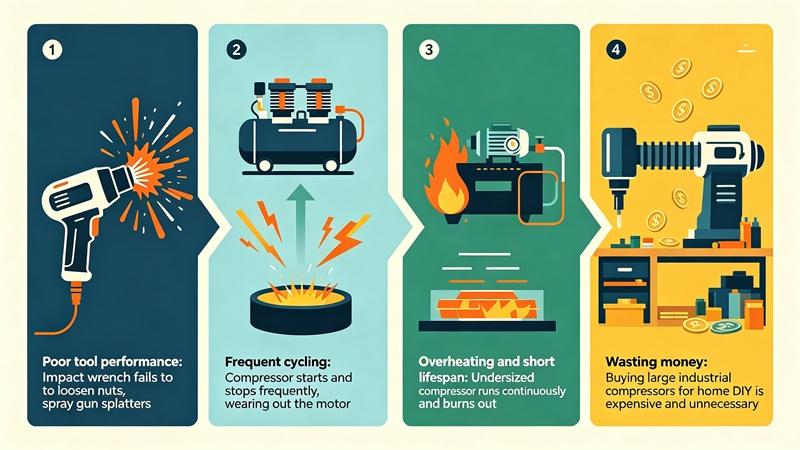
A mismatched air compressor causes real problems:
- Weak tool performance – Your impact wrench won’t break loose lug nuts. Your spray gun sputters.
- Frequent cycling – The compressor turns on and off every few seconds, wearing out the motor.
- Overheating and short longevity – An undersized compressor runs continueously and burns up.
- Wasted money – Buying an oversized industrial unit for home DIY use is expensive and unnecessary.
That’s why before spending any money, you need to understand how compressors work with air tools – and what your tools actually require.
How Air Compressors Power Air Tools
An air compressor pulls in atmospheric air and squeezes it into a smaller volume. That stored, pressurised air is then released to power pneumatic tools.
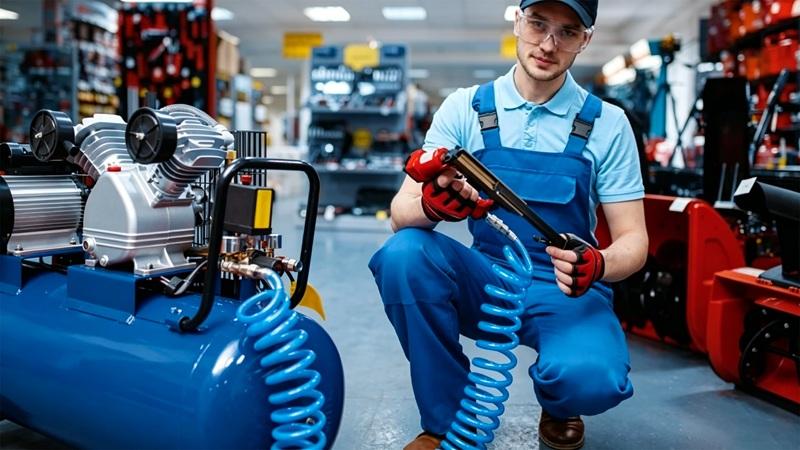
Two numbers matter most:
- CFM (Cubic Feet per Minute) – The volume of air the compressor delivers. This is the most important number for continuous tool operation. When people ask how much CFM they need, they are really asking about this volume of air per minute.
- PSI (Pounds per Square Inch) – The pressure of the air. Most air tools work well at 90–120 PSI.
Key insight: Many people focus only on PSI, but cfm is usually what determines whether a tool can run continuously without losing power. Always check the cfm rating of both your tools and your compressor.
A useful fact to keep in mind: Air compressors for powering tools typically fall within the CFM range of 10 to 110, depending on the tools’ air consumption. Small nail guns sit near the bottom of that range, while large sandblasting or industrial equipment requires 100+ CFM.
Why Bigger Isn’t Always Better for Air Compressors
There’s a common myth: “A bigger tank means a better compressor.”
Not true.
A large tank only stores air. What really matters is the pump’s ability to deliver enough CFM for your tools. A small compressor with an efficient pump and a modest tank can sometimes outwork a larger‑looking unit with a weak pump.
Also, a physically large stationary compressor is overkill for a home workshop where you only use a nail gun and an occasional blow gun. Don’t judge a compressor by tank size alone. Instead, assess your specific requirements carefully.
How to Determine the Right Size Air Compressor
Follow these steps to determine the right air compressor size for your situation. This process will help you choose a machine that meets your needs without overspending.

Step 1: List all the pneumatic tools you plan to use
Write them down. Example: nail gun, impact wrench, spray gun, blow gun, inflating tires.
Step 2: Find each tool’s CFM requirement at operating pressure
Check the tool manual or the manufacturer’s website. Look for “average CFM” or “CFM @ 90 PSI”. Different tools have different cfm requirements.
Step 3: If you run multiple tools simultaneously, add their CFM requirements
For example, if you often run an impact wrench (5 CFM) and a blow gun (3 CFM) at the same time, you need at least 8 CFM. Multiple tools running together is common in workshops.
If you only use one tool at a time, take the highest single CFM requirement.
Step 4: Add a 25% safety margin
Multiply your required CFM by 1.25. This gives you room for pressure drops, aging hoses, and future tools. This is a cost effective option compared to buying a new compressor later.
Step 5: Consider duty cycle – intermittent vs continuous use
- Intermittent use (nail gun, impact wrench in short bursts): a standard piston compressor works fine.
- Continuous use (spray painting, sandblasting, grinding): you need a compressor rated for 100% duty cycle – often rotary screw compressors or large two‑stage units.
Quick Reference: Common Air Tool CFM & PSI Requirements
| Tool | Typical CFM @ 90 PSI | Typical PSI |
|---|---|---|
| Finish nailer / stapler | 2–3 CFM | 70–90 |
| Framing nailer | 3–4 CFM | 90–120 |
| Impact wrench (1/2″) | 4–6 CFM | 90 |
| Air ratchet | 4–5 CFM | 90 |
| Die grinder | 5–8 CFM | 90 |
| Orbital sander | 8–12 CFM | 90 |
| Spray gun (HVLP) | 10–15 CFM | 90–120 |
| Sandblaster (small cabinet) | 15–25 CFM | 100–175 |
| Inflating tires (continuous) | 2–4 CFM | 60–90 |
Note: always check your specific tool’s manual for accurate cfm requirements.
The Cost‑Effective Solution: Using an Air Receiver Tank
Not everyone needs a giant, expensive compressor. If you have a short‑burst, high‑demand tool – like a sandblaster used for five minutes at a time – you may be able to use a small compressor plus an auxiliary air receiver tank.
How it works
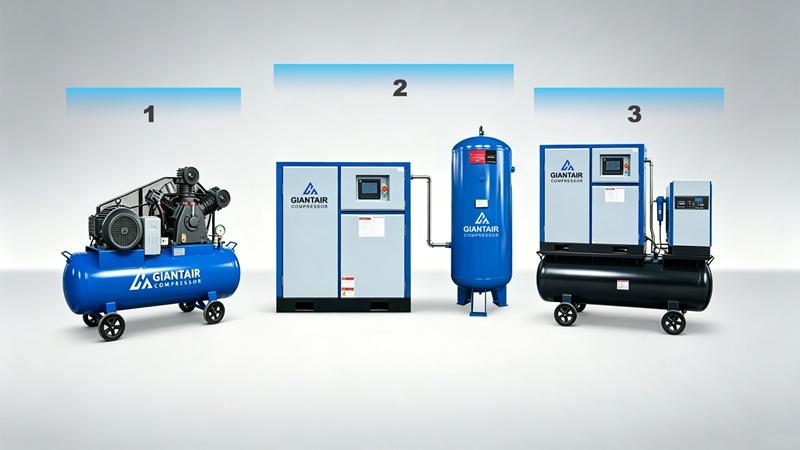
Air receiver tanks are used to store compressed air and help lower CFM air compressors keep up with higher demand. The compressor fills the extra tank during idle periods. When you use the high‑demand tool, both the compressor and the stored air feed the tool together. This allows a small compressor to handle short peaks without stalling.
When does this make sense?
- Home garage: occasional impact wrench or spray gun use.
- Small workshop: intermittent sanding or painting.
- You already have a small compressor and want to upgrade on a budget.
- Inflating tires at a service station – a compact setup works perfectly.
A critical note about compressor types and receiver tanks
Air receiver tanks are required for reciprocating air compressors. These piston‑style compressors (also called piston compressors) cannot run continuously. They need a tank to store air and smooth out pressure cycles. Without a tank, a reciprocating air compressor would pulsate and overheat quickly.
On the other hand, rotary screw compressors often do not need tanks due to their 100% duty cycle capability. They can run continuously and deliver a steady flow of air directly to your tools. In many industrial settings, rotary screw compressors are paired with a tank anyway – but it’s not strictly required for operation.
Basic tank sizing: As a rule of thumb, add 5–10 gallons of air receiver tank for every 1 CFM of deficit. Many users start with a 20‑gallon or 30‑gallon auxiliary tank.
This is one of the most overlooked money‑saving strategies in the compressor world. It’s a truly cost effective option that can reduce the need for a larger primary compressor – especially if you are using a reciprocating air compressor that benefits from extra storage.
Recommended Compressors by Tool Type and Budget
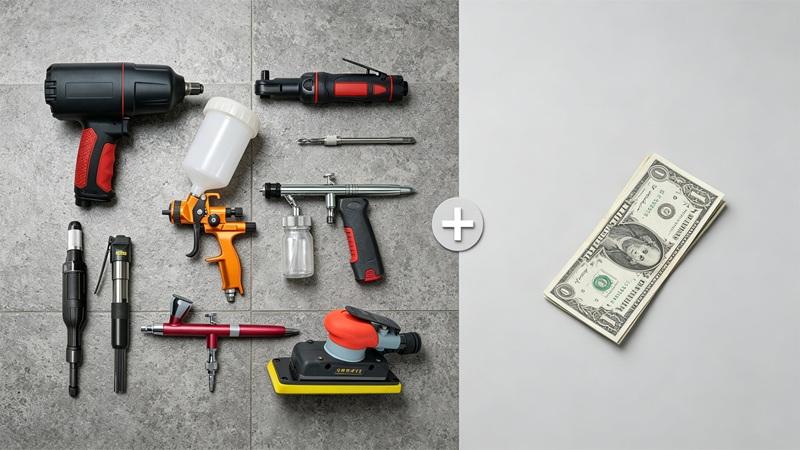
Here is a practical breakdown of compressor types, typical CFM ranges, and what you should expect to spend. Use this information to find the compressor best suited to your work.
Nail guns / staplers (2–4 CFM)
- Compressor type: Pancake or small hot‑dog compressor, often portable
- Tank size: 1–6 gallons
- Budget: $150–300
- Examples: Many oil‑free, portable units designed for trim carpenters.
Impact wrench / tire inflation / general garage (4–8 CFM)
- Compressor type: Twin‑tank (4–10 gallons) or small wheelbarrow compressor
- Budget: $250–600
- Look for: At least 4 CFM @ 90 PSI. Oil‑lubricated models are quieter and last longer. Great for inflating tires and running an impact wrench.
Spray painting (continuous) / small shop use (10–15 CFM)
- Compressor type: Two‑stage stationary compressor, 30–60 gallon tank
- Budget: $500–1,500
- Important: For good paint finish, add an air dryer or at least a good filter/water separator. These reciprocating air compressors are reliable for medium duty.
Sandblasting / grinding / continuous heavy use (15–25+ CFM)
- Compressor type: Rotary screw compressors or large two‑stage piston (60–80+ gallons)
- Budget: $1,500–5,000+ (rotary screw can be higher)
- Note: These are often 240V and need professional installation. Rotary screw compressors excel here because they can continue running all day, and they often operate without a large receiver tank thanks to their 100% duty cycle.
Special mention – Air rifle / PCP compressor
Air tools run at 90–150 PSI. PCP air rifles require 3,000–4,500 PSI. A standard air compressor will not work. You need a dedicated high‑pressure PCP compressor designed for that task.
Oil‑Free vs Oil‑Lubricated – Which One Should You Choose?
| Feature | Oil‑Free | Oil‑Lubricated |
|---|---|---|
| Maintenance | Lower (no oil changes) | Higher (regular oil changes) |
| Noise | Often louder | Usually quieter |
| Lifespan | Shorter (consumer grade) | Longer (industrial) – better longevity |
| Best for | Occasional use, DIY, clean air (painting) | Continuous use, garages, workshops |
Quick guide:
- Choose oil‑free if you use tools a few times per month and want low maintenance.
- Choose oil‑lubricated if you run tools every day, care about noise, or want the compressor to last 10+ years.
Common Mistakes When Buying an Air Compressor
Avoid these costly errors. Taking a few minutes to learn from others’ mistakes can save you a lot of time and money.

1. Only looking at tank size
Tank size does not tell you how much air the pump produces. Always check CFM @ 90 PSI.
2. Ignoring CFM requirements
Buying a 2 CFM compressor for a 6 CFM impact wrench guarantees disappointment.
3. Buying an undersized compressor
An undersized compressor runs constantly, overheats, and dies early. It’s false economy.
4. Oversizing for small applications
A 60‑gallon two‑stage compressor is overkill for a single nail gun. You’ll waste money and floor space.
5. Ignoring future expansion
If you plan to add a spray gun or sandblaster next year, buy a compressor that can handle that future demand now.
6. Neglecting moisture management
For painting, sandblasting, or electronics work, compressed air contains water vapour. Add a dryer or at least a good filter/water separator.
Energy Efficiency and Long‑Term Operating Costs
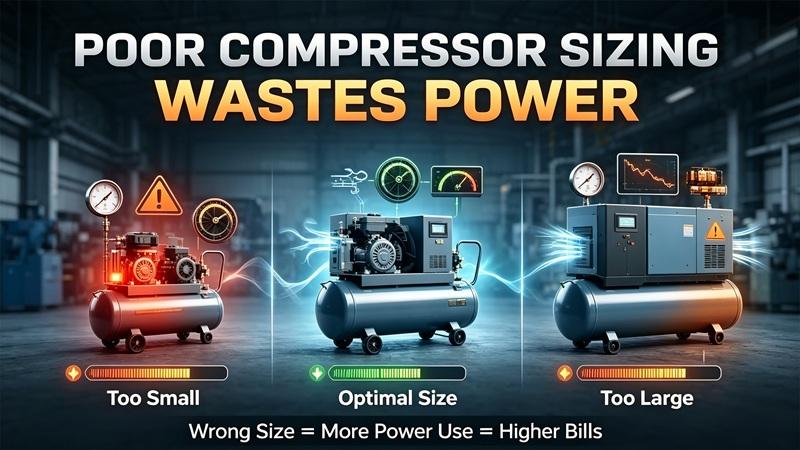
A properly sized compressor saves electricity. An oversized or undersized unit wastes energy.
- Air leaks are silent money burners. A ¼” leak at 100 PSI can cost hundreds of dollars per year in wasted electricity.
- Pressure drops due to undersized pipes or long hoses force the compressor to run harder.
- Variable speed drive (VSD) compressors adjust motor speed to match air demand. They are excellent for industrial environments with fluctuating use, but overkill for home shops.
Simple maintenance to extend life:
- Drain the tank daily or weekly.
- Clean or replace intake filters.
- Check for leaks with soapy water.
- For oil‑lubricated models, change oil as recommended. This small effort can reduce repair costs and improve longevity.
Budget Tiers – A Quick Summary
Use this as a final sanity check before buying. Based on the info above, you can now assess which tier is suited to your work.
| Tier | Budget (USD) | Best for | Typical Compressor Type |
|---|---|---|---|
| Economy | Under $300 | Home DIY, nail guns, inflating tires, light use | Oil‑free pancake / hot dog (1–6 gal), portable |
| Enthusiast | $300–700 | Garage mechanics, impact wrench, occasional spray | Twin‑tank or 20–30 gal, oil‑lube preferred, still portable for many |
| Professional | $700–2,000 | Small shop, continuous spray, multiple tools | Two‑stage, 60+ gal, cast iron pump (typically reciprocating air compressors) |
| Industrial | $2,000+ | Sandblasting, manufacturing, heavy daily use, running multiple tools simultaneously | Rotary screw compressors or large piston, 100% duty cycle |
Conclusion + Action Checklist
Choosing the right air compressor doesn’t have to be hard. Follow this checklist before you buy – it takes only a few minutes but saves a lot of headache.

- List all tools and note their CFM @ PSI.
- Determine if you will use multiple tools simultaneously – add CFM if yes.
- Add 25% safety margin to your required CFM.
- Decide on a configuration: single compressor or compressor + air receiver tank – remembering that reciprocating air compressors require a tank, while rotary screw compressors often do not.
- Match to your budget and future needs – don’t overspend, but leave room to grow.
- View the specifications of any compressor you consider. Find the cfm rating at 90 PSI.
Matching compressor capacity to your actual tool demand saves money, energy, and frustration. Whether you need reciprocating air compressors for intermittent work or rotary screw compressors for continuous operation, the key is matching the machine to the job.
Need Help Choosing the Right Air Compressor for Air Tools?
Every workshop and job site is different. If you are unsure about how much CFM you need, which type of compressor is suited to your application, or want to assess multiple tools running together, contact our team for professional recommendations.
We help DIYers, garages, and industrial facilities find the best air compressor for air tools – without guesswork. We’ll also point you to additional resources so you can continue learning.