

Air compressors depend on more than just power and pressure to operate properly. The right compressor oil protects internal components, reduces heat, and helps the system run efficiently over time. Whether the air compressor is used in an industrial setting, a workshop, or a home garage, choosing the correct oil has a direct impact on performance and maintenance costs.
This guide explains how compressor oil works, the different oil types available, how viscosity affects performance, and what to consider before placing an order for replacement oil. It also covers common maintenance practices, seasonal issues like winter operation, and why compressors require specialized oil instead of standard motor oil. Read on to make sure your air compressor running smoothly becomes standard.
Why is air compressor oil Matters
When an air compressor fails prematurely, degraded or incorrect oil is often the hidden cause. Unlike engine oil or hydraulic fluid, compressor oil is a specialized lubricant engineered to withstand extreme heat, high pressure, and continuous contact with compressed air and moisture. Understanding what compressor oil is—and why it matters—directly impacts equipment reliability, energy costs, and maintenance schedules.

Key Functions
1. Lubrication
Compressor oil is a specialized, non-detergent lubricant engineered to withstand extreme pressures, high temperatures, and moisture conditions generated during gas compression.
Its primary function is to reduce friction between moving metal parts—such as screw rotors, cylinder walls, bearings, and connecting rods. Without adequate lubricant, metal-to-metal contact causes rapid wear, overheating, and eventual seizing. A proper oil film separates surfaces, extending component life significantly.
2. Cooling
Air compression generates substantial heat. Compressor oil absorbs this heat as it circulates through the compression chamber and bearings, then releases it through the cooler (radiator) before recirculation. This cooling effect prevents thermal degradation of the oil itself and protects elastomeric seals from premature hardening.
3. Sealing
In rotary screw compressors, oil injected into the compression chamber fills microscopic gaps between the male and female rotors and between rotors and housing. This liquid seal minimizes internal backflow (slippage), directly improving volumetric efficiency. Without proper sealing, the compressor consumes more energy to deliver the same output.
4. Cleaning
As oil circulates, it captures carbon particles, metallic wear debris, atmospheric dust, and oxidized varnish. The oil filter removes these contaminants, while clean oil continues to flush internal surfaces. This cleaning action prevents deposit buildup on valves, rotors, and cooler passages—a common cause of reduced capacity and unplanned shutdowns.
How Compressor Oil Works in an Air Compressor
Compressor oil does far more than lubrication—it actively cools, seals, and protects internal components during operation.
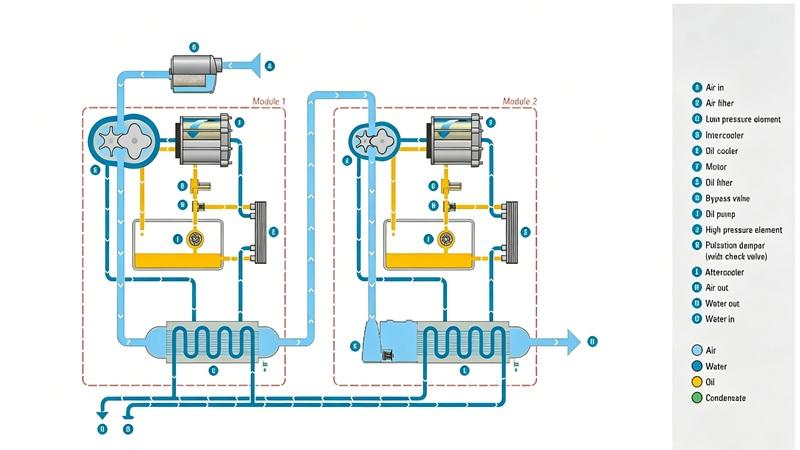
Oil Circulation Inside the Compressor
In oil-flooded rotary screw compressors, a closed-loop system circulates oil continuously. Pressure moves oil from the separator tank through a cooler and filter, then injects it into the compression chamber. There, oil mixes with incoming air, lubricating and sealing as compression occurs. The air-oil mixture then returns to the separator, where oil is extracted and recycled.
Heat Dissipation and Friction Reduction
Compression generates intense heat (80–110°C). Compressor oil absorbs this heat, passes through a radiator, and returns to cool the system. Simultaneously, the oil forms a thin film between moving parts (rotors, bearings, shafts), eliminating metal-to-metal contact. Less friction means lower energy draw and reduced wear.
Impact on Efficiency and Component Lifespan
Proper oil seals microscopic rotor gaps, preventing internal air leakage. Better sealing improves volumetric output and reduces power consumption (kW per m³/min). Clean, stable oil also protects bearings from corrosion and prevents carbon deposits on valves and coolers. Regular oil changes with manufacturer-recommended fluid typically doubles airend service life versus neglected schedules.
Quality compressor oil is the most cost-effective investment in uptime and longevity.
Types of Air Compressor Oil Explained
Compressor lubricants are categorized by their ISO Viscosity Grade (VG), differing from automotive motor oil standards. Compressor design dictates specific operational demands that change the exact viscosity and additive requirements of the lubricant. Choosing the right type directly affects efficiency, maintenance intervals, and equipment lifespan. Below are the four main types available.
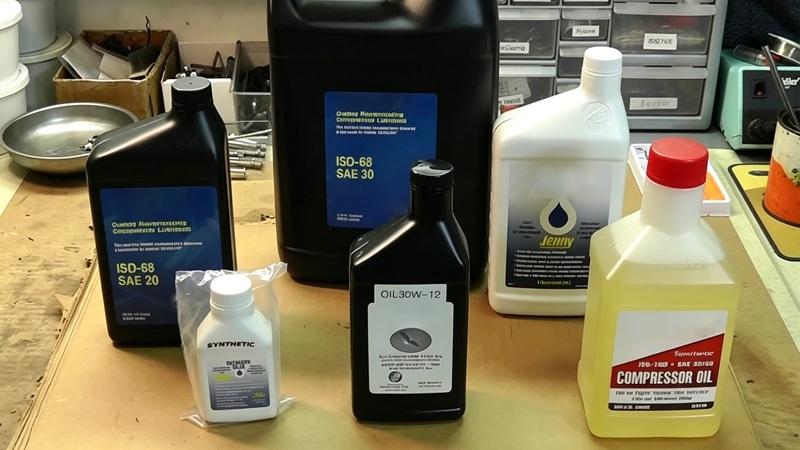
Mineral Compressor Oil
Standard mineral-based compressor oils are derived from refined petroleum and are among the most commonly used types of air compressor oil. Also known as mineral oil, this type is generally less expensive than synthetic oil but requires more frequent oil changes due to its shorter lifespan and lower performance in extreme temperatures. They work well for light-duty applications and older equipment operating in moderate conditions.
Best for: Small reciprocating compressors, low-hour applications, and equipment without strict efficiency demands.
Limitations: Mineral oil oxidizes faster under high heat (above 100°C), forms carbon deposits, and requires more frequent changes (typically 500–1,000 hours). It is not recommended for continuous heavy-duty rotary screw compressors. To avoid emulsification, always use non-detergent oil in compressors, and consult a guide for selecting the right lubricant based on compressor type.
Synthetic Compressor Oil
Synthetic air compressor oils are engineered for superior performance and longevity, making them ideal for industrial and commercial applications. These chemically engineered fluids—most commonly Polyalphaolefin (PAO), Polyalkylene Glycol (PAG), or diester-based formulations—offer extended drain intervals (4,000–8,000+ hours), superior high-temperature stability, better low-temperature fluidity, lower volatility (less oil carryover), and reduced energy consumption.
Best for: Modern rotary screw compressors, high-temperature environments, continuous operation, and applications demanding maximum efficiency.
Semi-Synthetic Oil
Semi-synthetic oil blends mineral base stock with a percentage (typically 10–30%) of synthetic fluid. It offers a middle ground between cost and performance, providing better oxidation resistance than pure mineral oil, moderate drain intervals (2,000–4,000 hours), and reduced deposit formation at a lower cost than full synthetics.
Best for: Mid-range rotary screw compressors, facilities transitioning from mineral to synthetic, and budget-conscious operations still wanting improved protection.
Food-Grade and Specialty Oils
Food-grade compressor oils meet strict safety regulations for incidental food contact. Two main classifications exist under NSF H1:
NSF H1 (Food-Grade Oils): Food-grade air compressor oils are specially formulated for use in industries like food processing and pharmaceuticals, meeting NSF H1 standards for safety with consumable products. Technically, these are lubricants for applications where occasional contact with food is possible.
They are non-toxic, tasteless, and odorless, typically based on white mineral oil or synthetic PAO/PAG with approved additives.
NSF H3 (Soluble Oils): Used for cleaning and rust prevention on hooks, trolleys, and similar equipment, but not as continuous compressor lubricants.
Other specialty oils include:
- High-temperature oils: For compressors running above 120°C discharge
- Low-volatility vacuum pump oils: For applications requiring ultra-clean air
- Biodegradable oils: For environmentally sensitive sites (forestry, marine)
Best for: Food and beverage processing, pharmaceutical manufacturing, and any facility where compressed air contacts edible products.
Special case – centrifugal compressors: High-speed centrifugal compressors operate oil-free inside the compression pathway, relying instead on external lubrication for bearings and gearboxes.
Quick Selection Guide
| Oil Type | Drain Interval | Best Application |
|---|---|---|
| Mineral | 500–1,000 hrs | Light duty, older equipment |
| Semi-synthetic | 2,000–4,000 hrs | Mid-range, budget-conscious |
| Synthetic | 4,000–8,000+ hrs | Heavy duty, high efficiency |
| Food-grade | Varies (check label) | Food/pharma with contact risk |
Bottom line: Always follow the compressor manufacturer’s viscosity and type recommendation. Using the wrong oil—even a high-quality synthetic—can damage seals, reduce efficiency, and void warranties.
Air Compressor Oil Types by Viscosity (ISO Grades)
Compressor oils are classified by viscosity using ISO grades such as 32, 46, and 68. These numbers indicate how thick or thin the oil is under operating conditions. Lower viscosity oils flow more easily, especially in colder temperatures, while higher viscosity oils provide stronger film protection under heat and heavy load.

Selecting the correct viscosity is important because oil that is too thin may not adequately protect internal components, while oil that is too thick can restrict flow and reduce efficiency. Manufacturers typically provide viscosity charts to match oil grades with specific compressor models and operating conditions.
Temperature plays a major role in viscosity selection. In winter conditions, lower viscosity oil may improve startup performance and circulation. In high-temperature environments, higher viscosity oil helps maintain protective strength under thermal stress. Matching oil to both machine specifications and environment is essential.
Oil Requirements for Different Compressor Types
Different types of air compressors require different oil characteristics due to differences in design and operation. Rotary screw compressors operate continuously and generate steady heat, which makes synthetic oil the preferred option due to its stability and long service life.
Piston or reciprocating compressors operate in cycles and experience higher peak temperatures during compression strokes, as pistons generate high extreme localized heat requiring oil with exceptional thermal stability to prevent carbon residue. These systems often use mineral or semi-synthetic oils depending on workload and operating frequency.
Oil-lubricated compressors rely on oil for lubrication, cooling, and sealing inside the pump, while oil-free compressors are designed to operate without oil in the compression chamber. Because these systems are built differently, it is essential to follow manufacturer specifications when selecting or replacing oil.
Compressor Oil vs Motor Oil: What’s the Difference?
Compressor oil and motor oil are designed for completely different operating environments. Air compressors require oil that can handle continuous pressure cycles, heat buildup, and moisture exposure, while motor oil is designed for combustion engines.
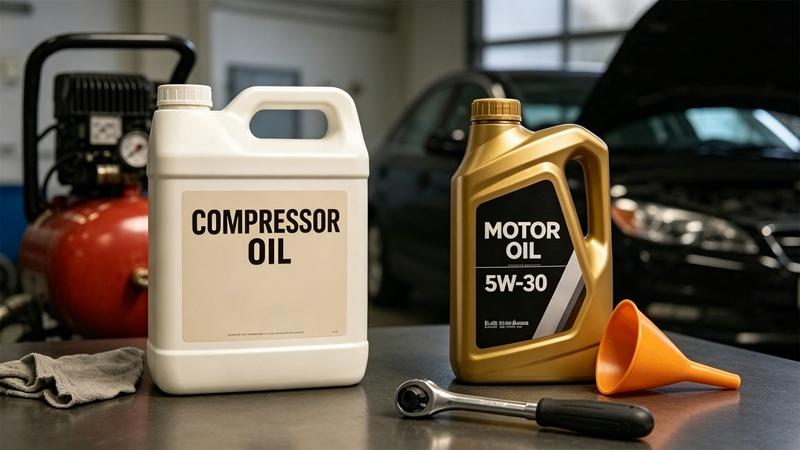
Using automotive motor oil in an air compressor is not recommended. Automotive engine oil contains detergents and additives that can harm air compressors by causing carbon buildup, which can block valves and reduce efficiency. It may also contain other additives that are not compatible with compressor operation, leading to contamination or reduced efficiency over time.
Compressor oil is formulated to remain stable under pressure without foaming or breaking down. It also supports sealing and heat control in ways that motor oil is not designed to handle. Using the wrong oil can lead to overheating, increased wear, and even pump failure.
How to Choose the Right Oil for Your Air Compressor
Choosing the correct compressor oil depends on operating conditions such as pressure, temperature, and workload. Heavy-duty compressors generate more heat and typically require higher-performance oil, while lighter-duty systems may operate effectively with standard mineral oil.
Manufacturer recommendations are the most reliable reference point. Most air compressors include specifications for oil type and viscosity grade, and following these guidelines helps ensure proper performance and reduces the risk of damage.
Application also matters. Industrial systems often benefit from synthetic oils due to continuous operation, while occasional-use workshop compressors may not require the same level of performance.
How Much Oil Does an Air Compressor Need?
Oil capacity depends on compressor size and design. Smaller portable units may require only a small amount of oil, while larger industrial systems can hold several quarts. The exact capacity is always listed in the manufacturer reference documentation.

Oil levels should be checked when the compressor is off and on level ground. Most systems use a sight glass or dipstick. The oil level should stay within the recommended range.
Too little oil can cause overheating and poor lubrication, so make sure there is enough oil to properly lubricate the parts when operating initially. Too much oil can cause pressure issues and foaming. Regularly checking the oil level and condition helps maintain stable operation.
How Often Should You Change Compressor Oil?
Oil change intervals vary depending on compressor type, usage intensity, and operating environment. It is generally recommended to change the oil every 500 to 1,000 hours of run time to ensure optimal performance, but the exact interval should always be confirmed in the equipment manual.
Signs that oil needs replacement include darkening, contamination, a burnt smell, increased noise, or reduced performance. Heavy workloads and harsh environments can shorten oil life.
Regular inspection is important because oil degrades gradually over time. Maintenance keeps the system protected.
Benefits of Using the Right Compressor Oil
Using the correct compressor oil improves system efficiency by reducing internal friction and heat buildup. It also reduces wear on components and lowers maintenance costs.

Proper oil selection supports smoother operation and more consistent performance under load. Over time, this improves reliability and extends equipment lifespan.
Common Mistakes When Using Air Compressor Oil
One common mistake is using the wrong type of oil. Another is ignoring viscosity requirements, especially in changing temperatures.
Skipping oil changes is also a major issue. These mistakes are avoidable with proper maintenance and manufacturer guidance.
Storage, Handling, and Safety Tips
Compressor oil should be stored in sealed containers away from moisture, dust, and extreme temperatures. Contamination can reduce oil performance and damage the system.
Clean tools should always be used during oil changes. Used oil must be disposed of properly. Always let the compressor cool before servicing.
FAQ: Compressor Oil for Air Compressors
Can I use motor oil in my air compressor?
It’s not recommended. Motor oil is designed for engines, not compressors. It can break down under compressor conditions and cause deposits or overheating.
What type of oil is best for my compressor?
The best oil depends on your compressor type and operating conditions. Manufacturers specify the correct air compressor oil and ISO grade in the reference manual.
How do I know if my oil is bad?
Bad oil usually appears darker or cloudy. It may smell burnt or cause increased noise or reduced performance.
Is synthetic oil better than mineral oil?
Synthetic oil performs better under heat and heavy use. Mineral oil is cheaper and works for lighter use. The right choice depends on workload and specifications.
Conclusion: Choosing the Best Compressor Oil for Your Needs
Choosing the right compressor oil depends on compressor type, workload, and temperature conditions. When matched correctly, the system runs more efficiently and lasts longer.
Industrial systems often use synthetic air compressor oil, while lighter systems may use mineral oil. Winter conditions can also affect performance.
Always follow manufacturer reference guides. Some suppliers like Giantair provide technical documentation through HTTP-based access systems that may require server permission. Continue checking these details before placing an order to ensure compatibility and protect the pump.
Get the Right Compressor Oil for Your Application
Always match oil to specifications and ISO ratings. Manufacturer guidance should be checked before purchase.
If unsure, consult a technician or supplier. This helps ensure proper oil selection and reliable compressor performance. You don’t need to blindly test options. Contact us today for more information!