

Introduction
Compressed air is one of the most widely used forms of energy in the modern world. It powers tools, supports manufacturing, and drives automation across industries. Yet many people still ask: what is compressed air, what is in it, and why is it so important?
Compressed air is often called the “fourth utility” because it is as essential to modern industry as water, electricity, and gas, widely used to power tools, equipment, and machinery across a broad range of applications. In fact, it is used in approximately 70% to 75% of all industrial processes, and in Europe alone, nearly 10% of industrial electricity consumption is dedicated to producing compressed air.
This article provides a complete guide to compressed air, including how it works, what it contains, how compressed air systems are designed, and how to use it safely and efficiently.
What Is Compressed Air
Compressed air is atmospheric air that has been pressurized by reducing its volume, forcing air molecules into a smaller space. This process increases both air pressure and stored energy, allowing compressed air to function as a reliable energy source.
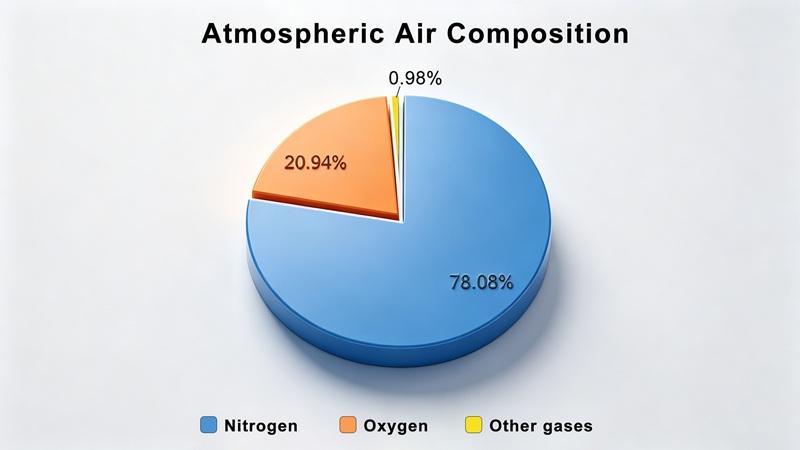
Under normal conditions, atmospheric air contains:
- About 78% nitrogen
- About 21% oxygen
- Small amounts of carbon dioxide and other gases
When this air is compressed, its behavior changes significantly. Because the air molecules are packed closer together in a smaller volume, compressed air can store energy and deliver force efficiently. This is why it is widely used for transmitting energy and powering equipment.
In practical terms, compressed air is used everywhere—from powering pneumatic tools to supporting complex production processes in industrial environments.
How Compressing Air Works
The process of compressing air is based on fundamental physical principles involving pressure, volume, and energy.
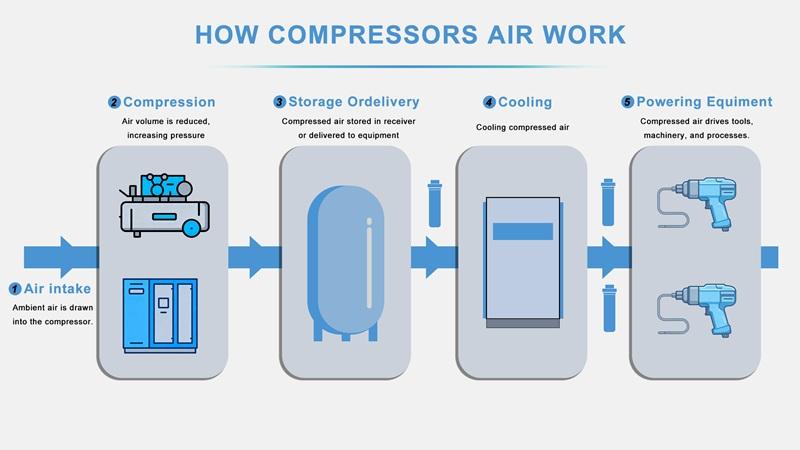
When air is drawn into a compressor, it starts at normal atmospheric pressure. The compressor then reduces the space available for the air, forcing air molecules into a smaller space and bringing them closer together. which increases their kinetic energy and temperature, one key effect of this process is known as the heat of compression.
As the air is compressed, its kinetic energy increases, which raises its temperature. This is why compressed air systems often require cooling stages, as compressed air cools after compression and can lead to condensation of water vapor.
Interestingly, under high pressure, compressed air behaves almost like a liquid. The density of the air molecules increases to the point where the air can be efficiently stored and released when needed. This ability to store energy makes compressed air extremely useful in applications where consistent power is required.
What Is in Compressed Air?
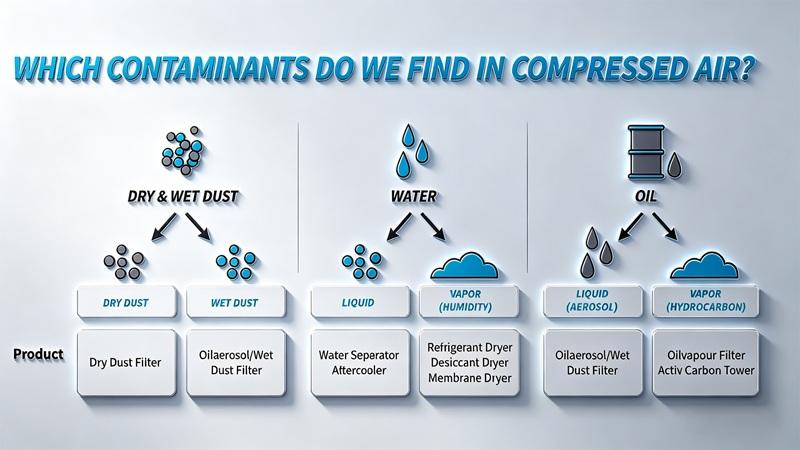
Although compressed air starts as clean atmospheric air, the compression process introduces several additional elements that can affect system performance and air quality.
Base Composition
- Nitrogen
- Oxygen
- Trace gases such as carbon dioxide
Contaminants Introduced During Compression
- Moisture and water vapor → leads to corrosion and system damage
- Oil → from lubricated compressors
- Dust and debris → from intake air and piping
- Other contaminants → including chemicals in certain environments
These contaminants can have serious consequences. For example, excessive moisture can lead to rust inside pipelines and tanks, while oil and particles can damage sensitive equipment or contaminate products.
Because of this, maintaining compressed air quality is essential, especially in industries like food processing, pharmaceuticals, and electronics.
Components of a Compressed Air System
A modern compressed air system consists of multiple components designed to generate, store, treat, and distribute air efficiently.
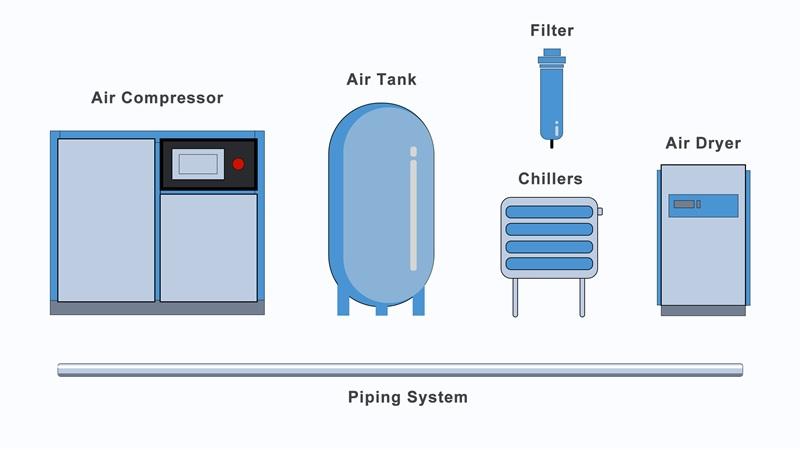
- Air Compressors:The core of the system, responsible for compressing atmospheric air into a usable energy source.
- Air Receiver Tanks:These tanks store compressed air, stabilize pressure, and allow systems to operate efficiently. They are especially useful in remote areas such as mines or construction sites where a continuous power supply may not be available.
- Air Dryers:Remove moisture and prevent condensation, which can otherwise damage equipment and reduce system efficiency.
- Filters:Eliminate oil, dust, and other contaminants to ensure high air quality.
- Chillers:Help cool compressed air after compression, reducing temperature and moisture levels.
- Piping Systems:Distribute compressed air throughout industrial facilities.
Each of these components plays a critical role in ensuring the system delivers the required pressure, quality, and operational efficiency.
How Do Different Compressors Compress Air?
There are two main types of air compressors used in industrial settings.
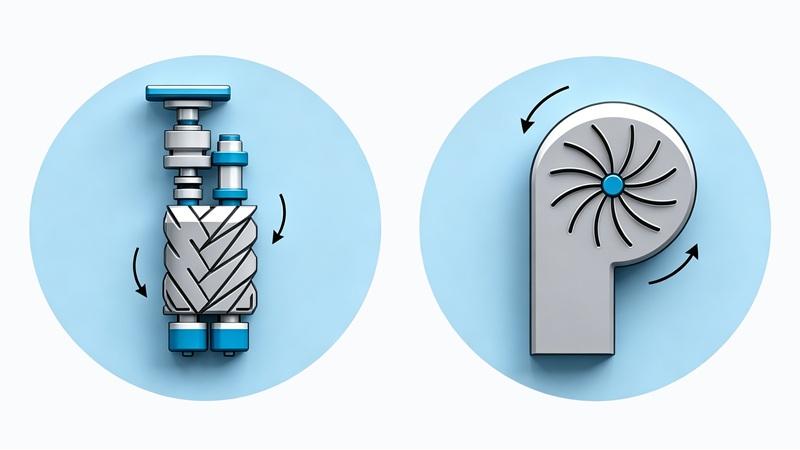
Positive Displacement Compressors
These compressors trap air and reduce its volume mechanically. Common types include:
- Rotary screw compressors
- Reciprocating compressors
They are widely used for consistent pressure applications.
Dynamic Compressors
These use high-speed rotating elements to increase air velocity and convert it into pressure. They are typically used in high-flow applications.
The choice of compressor depends on required pressure levels, flow rates, and specific industrial applications.
Applications of Compressed Air
Compressed air is widely used across multiple industries as a flexible and reliable energy source.
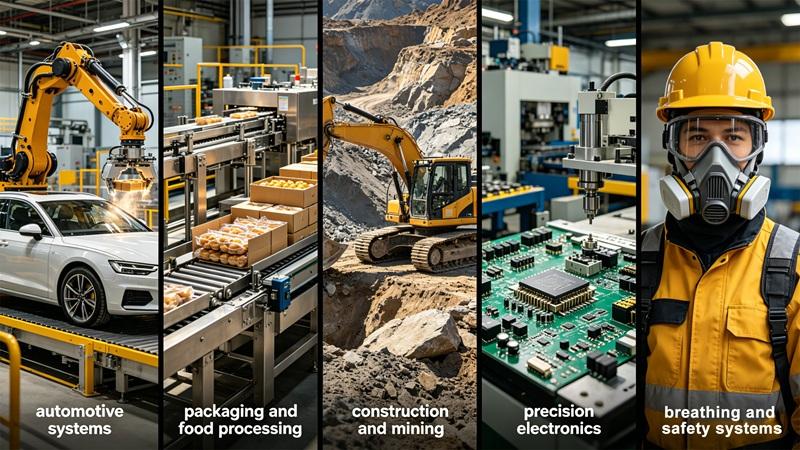
- In automotive systems, it powers pneumatic tools, inflates tires, and supports spray painting.
- In packaging and food processing, it operates sealing and filling equipment and is used in modified atmosphere packaging (MAP) to preserve packaged foods.
- In construction and mining, compressed air drives drills and heavy tools, especially in remote areas without stable electricity.
- In manufacturing, it supports assembly lines, powers equipment, and is used for cleaning and cooling manufacturing processes. while quick-release couplings also make it easier to change tools quickly, helping improve overall efficiency and productivity.
- In precision electronics, compressed air allows for variable speed and torque control, which is critical for delicate automated tasks.
- In breathing and safety systems, where it supplies air for breathing apparatus.
Because it is efficient, durable, and safe in harsh environments, compressed air remains a critical part of modern industrial and production processes.
Why Compressed Air Is So Important
Compressed air is considered an excellent medium for energy transmission because it is:
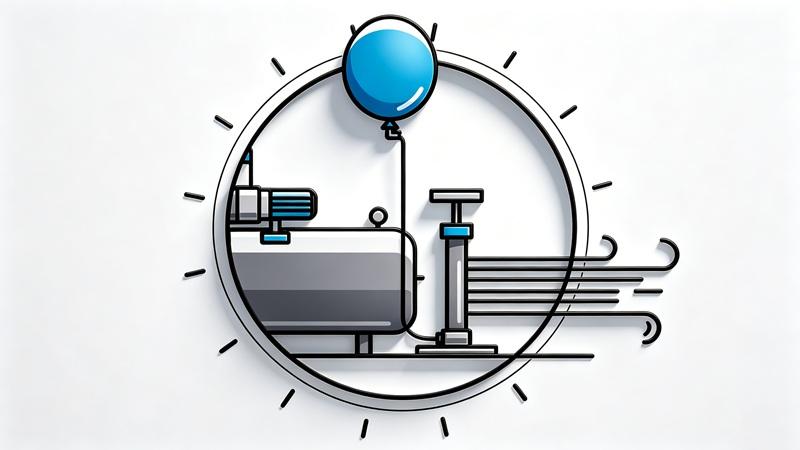
- Flexible and adaptable
- Safe compared to electrical systems in wet or hazardous environments
- Reliable in harsh industrial settings
Unlike electricity, compressed air does not produce sparks, making it ideal for environments involving chemicals or flammable materials. It is also suitable for use in high-humidity or dusty conditions.
Compressed Air Quality Standards
Compressed air quality is not just a general concept—it is a measurable standard defined by contamination levels. In industrial applications, air quality is primarily determined by three types of contaminants:
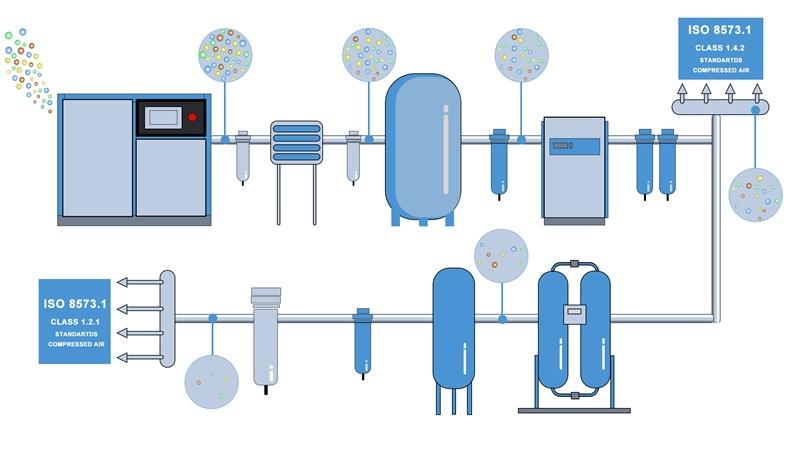
- Solid particles (dust, debris, rust)
- Moisture (water vapor and liquid water)
- Oil (aerosols and vapor from compressors)
To standardize these requirements globally, the most widely used framework is ISO 8573-1, which defines compressed air purity classes based on allowable contamination levels.
Why Air Quality Classes Matter
Different industries require very different levels of compressed air quality:
- General industrial use (pneumatic tools)
→ Lower classes acceptable
→ Some particles and moisture tolerated - Electronics and precision manufacturing
→ Requires low particle contamination
→ Prevents product defects - Food and pharmaceutical industries
→ Require oil-free and dry air
→ Prevents contamination and ensures safety
Poor air quality can lead to equipment damage,product contamination,increased maintenance costs or reduced operational efficiency
Staged Filtration and Drying
To meet ISO 8573-1 air quality requirements, compressed air systems use a multi-stage treatment process rather than a single filter.
A typical setup includes pre-filtration to remove large particles and bulk oil, followed by an air dryer to eliminate moisture and water vapor. Fine filters then capture smaller particles and oil aerosols, while activated carbon filters are used in high-purity applications to remove oil vapor and odors. This staged approach ensures stable air quality, protects equipment, and helps achieve the required ISO purity class.
The medium of compressed air can be clean and non-toxic, suitable for sensitive industries like food processing and pharmaceuticals with proper filtration and drying.
High-quality compressed air systems utilize multiple purification stages to address contaminants such as particulates, oil, and water vapor, which can cause issues like corrosion and product contamination.
Energy Efficiency and Costs
Despite its advantages, compressed air is energy-intensive.
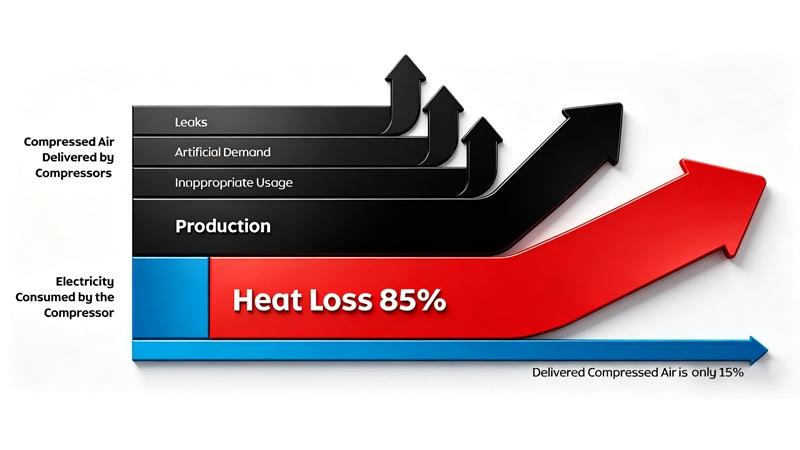
In many industries, it accounts for a significant portion of electricity consumption. Inefficient systems can waste large amounts of energy.
Ways to Improve Efficiency
- Use variable speed compressors
- Fix leaks promptly
- Optimize system design
Improving efficiency not only reduces costs but also enhances system performance.
Maintenance of Compressed Air System
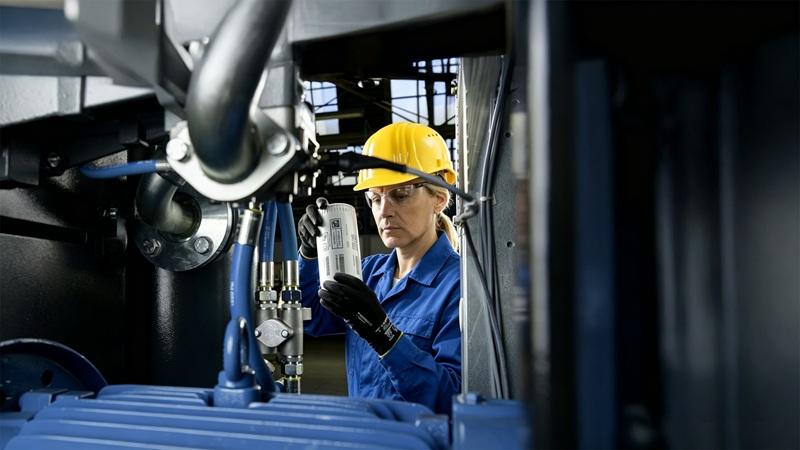
Regular maintenance is essential to ensure system reliability and longevity.
Best Practices
- Check for leaks
- Drain tanks to remove moisture
- Replace filters regularly
- Monitor system pressure
Proper maintenance prevents issues such as corrosion, which is a leading cause of air receiver tank failures.
Safety of Compressed Air
Pneumatic tools are highly valued for their durability and reliability in demanding conditions. With fewer moving parts than electric tools, they withstand harsh environments more effectively and are less susceptible to overheating or electrical shorts, allowing consistent performance even during prolonged heavy use.
Compressed air tools are particularly well-suited for hazardous, wet, or high-humidity settings, as they produce no sparks and generate minimal heat buildup. Additionally, they can handle overloads without damage to the tool or power source, making them inherently overload-proof.
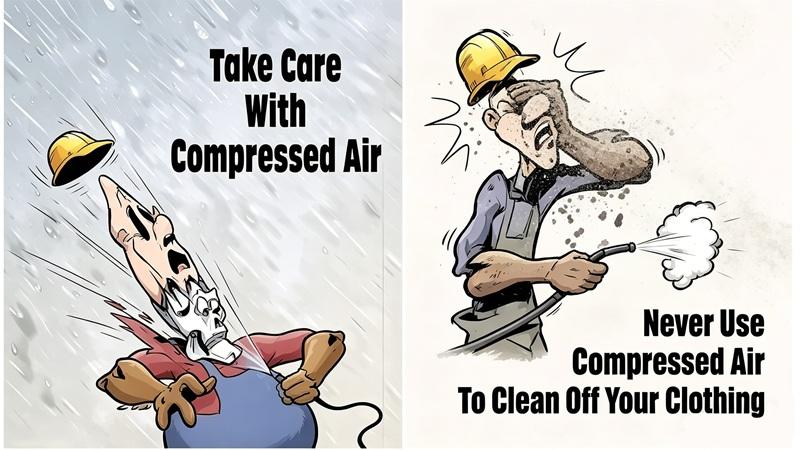
Compressed air is generally safe but can be dangerous if misused.
Potential Risks:High-pressure injuries,Tank explosions due to corrosionExposure to contaminants
For example, using compressed air to clean clothing or directing it at the body can cause serious injury or even fatal damage to the lungs.
Safe Use Guidelines
- Never point compressed air at people
- Regularly inspect tanks and components
- Ensure proper system design and operation
Common Questions and Misconceptions
Is canned air the same as compressed air?
No. Canned air often contains compressed gas rather than true atmospheric air.
Can compressed air explode?
Yes, especially if tanks are not maintained and corrosion weakens the structure.
Is compressed air stored as a liquid?
No, but under pressure it behaves similarly due to its density.
Conclusion
Compressed air is a versatile and reliable energy source that plays a central role in modern industry. From powering tools to supporting complex production processes, it remains a key part of efficient and scalable industrial operations.
By understanding how compressed air works, what it contains, and how to manage system quality, businesses can improve efficiency, reduce operating costs, and maintain safe, consistent performance.
As industrial demands continue to grow, optimizing your compressed air system is more important than ever. If you’re looking to improve performance or select the right equipment for your needs, explore our solutions or contact our team to find the most efficient setup for your application.