
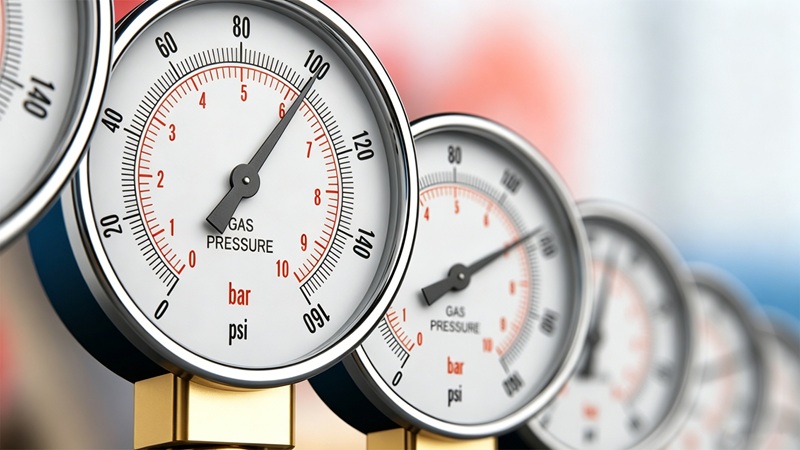
Pressure is one of the most commonly used units in industrial applications, pneumatic systems, hydraulic systems, air compressors, fuel storage, and even bicycle tires. Understanding PSI, PSIA, and PSIG helps explain how pressure is measured, how much force is exerted per square inch, and why atmospheric pressure matters in technical systems.
By the end, you’ll have a clearer understanding of how pressure measurement works in both everyday equipment and industrial applications.
Pressure Measurement And Atmospheric Pressure
Atmospheric pressure is the force created by the weight of air pressing against surfaces. Even though air feels light, air molecules constantly push on everything around us. At sea level, standard atmospheric pressure equals 14.7 psi.
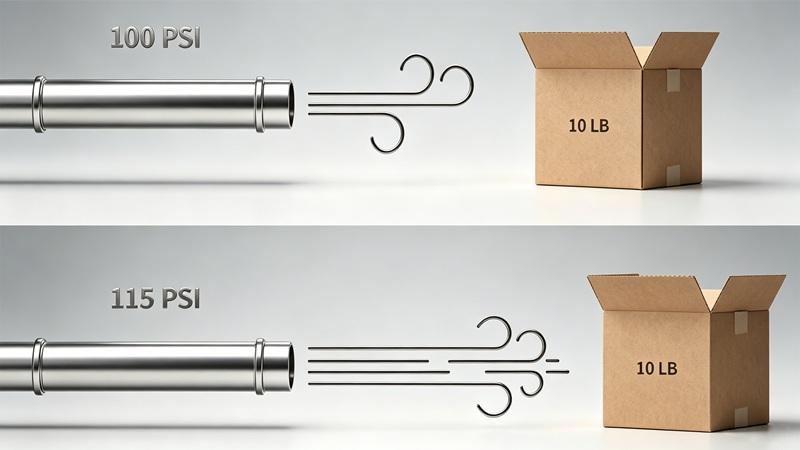
Most pressure gauges measure pressure relative to atmospheric pressure rather than measuring total pressure directly. A reading of 0 PSIG does not mean there is no pressure in a system. It simply means the internal pressure matches the surrounding air pressure.
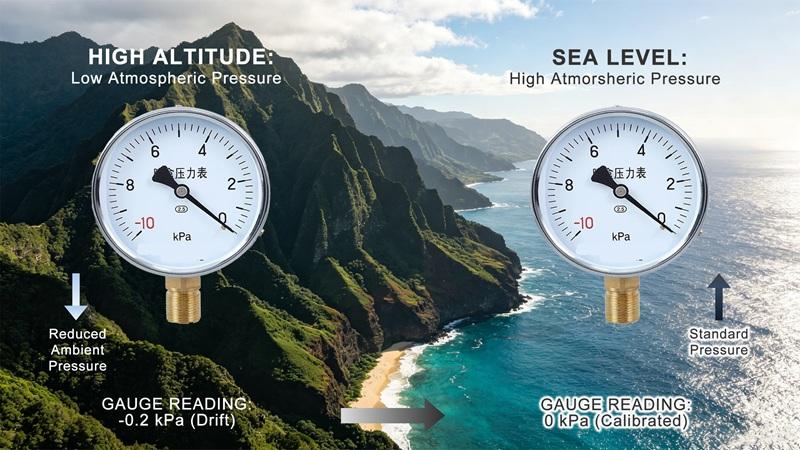
Atmospheric pressure also changes with altitude. Higher elevations have lower atmospheric pressure, which affects gauge readings and pressure calculations. Absolute pressure includes atmospheric pressure in the total measurement.
What is the Difference Between PSI, PSIA and PSIG?
What Is PSI(Pounds per Square Inch)?
PSI stands for Pounds per Square Inch. It is a unit of pressure that measures the amount of force (in pounds) applied to one square inch of area.
In simple terms: if you press down with one pound of force on an area of one square inch, you are exerting 1 PSI of pressure.
PSI is widely used in the United States for measuring pressure in household, commercial, and industrial applications, making it a standard unit for pressure measurement. You will find PSI on:
- Tire pressure gauges (typically 30–50 PSI for cars)
- Air compressors (tools often require 90–120 PSI)
- Water pressure regulators (home water systems: 40–60 PSI)
- Hydraulic and pneumatic systems (industrial machinery)
- Scuba diving tanks (up to 3,000 PSI)
What Is PSIG (Pounds per square gauge)?
PSI measures pounds per square inch. It is a widely used unit of measurement, known in various industrial applications.
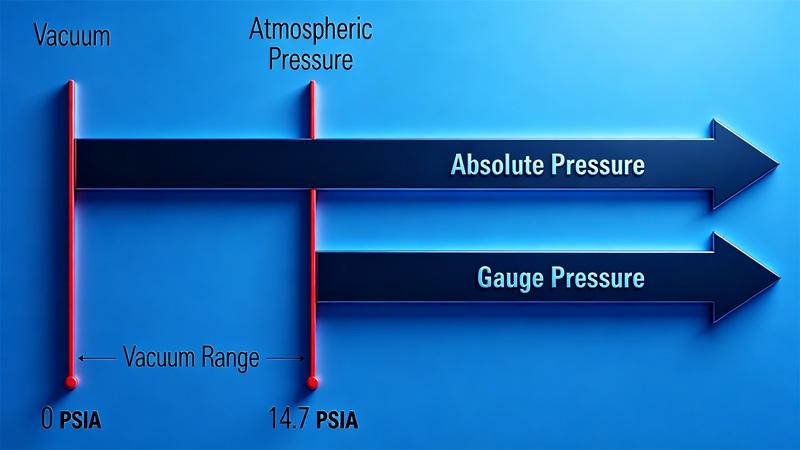
PSIG stands for pounds per square inch gauge. It measures pressure relative to the surrounding atmospheric pressure.
It does not measure total pressure or vacuum pressure. Instead, it shows how much pressure exists above normal atmospheric conditions.
For example, a reading of 50 PSIG means the system pressure is 50 psi higher than surrounding air pressure.
PSIG is widely used in air compressors, pneumatic systems, industrial tools, tire pressure gauges, compressed air systems, and hydraulic systems because it reflects real operating conditions.
What Is PSIA (Pounds per square inch absolute)?
PSIA stands for “pounds per square inch absolute.” It measures pressure starting from a perfect vacuum — meaning total emptiness, with no air at all. That’s its zero point. The reason we use the term PSIA is to make clear that the pressure is measured against a vacuum, not against the air around us.
The more common measurement you see on tire gauges or compressor gauges is PSIG, which uses the surrounding air pressure as its zero.
At sea level, the pressure of the atmosphere is 14.7 psi (roughly 101 kilopascals). So if you have a system at sea level that reads 0 PSIG, the absolute pressure is actually 14.7 PSIA. (Just for reference, 1 psi equals 6.895 kilopascals, so 14.7 psi × 6.895 ≈ 101 kPa.)
Engineers and scientists use PSIA when they need the total pressure regardless of weather or altitude — for example, in vacuum systems, fuel tanks, or lab equipment. The key difference is simple: PSIA starts from a vacuum; PSIG starts from the air pressure around you. Because sea level air is about 14.7 psi, you always add that number to any PSIG reading to get PSIA.
How To Convert Between PSIA And PSIG
PSIA and PSIG use different reference points, so conversion depends on atmospheric pressure.
PSIG measures pressure relative to surrounding air, while PSIA measures total pressure including that air pressure.
At sea level, atmospheric pressure is 14.7 psi.
Conversion formulas:
- PSIA = PSIG + atmospheric pressure
- PSIG = PSIA − atmospheric pressure
Measurement Tools And Pressure Measurement Devices
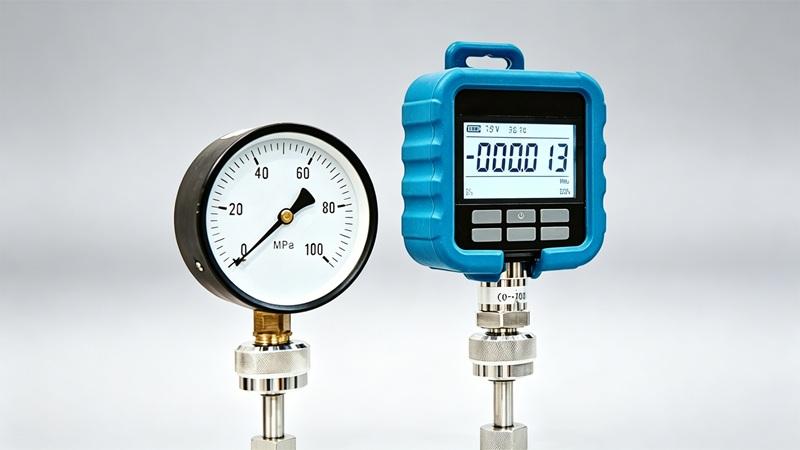
Pressure is measured using different instruments depending on whether PSIG or PSIA is needed.
Most everyday systems use gauge-based tools that measure pressure relative to atmospheric conditions.
Common PSIG instruments include mechanical dial gauges, digital tire gauges, and industrial compressor gauges. These are used in compressed air systems, tires, pneumatic tools, and hydraulic equipment.
PSIA instruments include absolute pressure sensors and transducers. These measure pressure relative to a vacuum and are used in aerospace, vacuum systems, scientific research, and fuel or gas storage systems where total pressure accuracy is required.
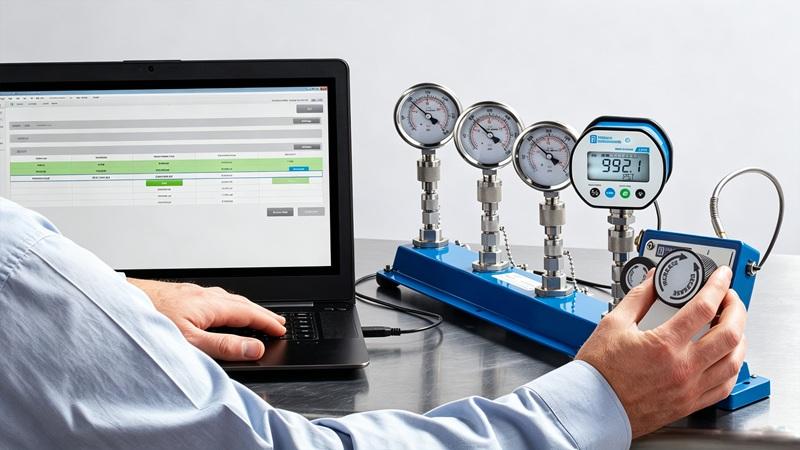
Pressure measurement devices should be calibrated regularly. Wear, environmental changes, and sensor drift can reduce accuracy over time.
How PSI Is Used in Air Compressors And Equipment

PSI is essential in air compressor systems because it shows how much compressed air is stored and delivered.
Air compressors increase pressure by forcing air into a smaller space. The PSI rating determines whether equipment can safely operate.
Pressure ratings also apply to tanks, hoses, and pneumatic tools. Each component has a maximum PSI limit that must not be exceeded.
Correct pressure is important. Low pressure reduces performance. High pressure can damage equipment or create safety risks.
When choosing an air compressor for air tools, PSI tells you how much force the compressed air can deliver. Most pneumatic tools – like an impact wrench, nail gun, or spray gun – are designed to run at 90 PSI.
Key fact: While PSI is important, the CFM (Cubic Feet per Minute) – or cubic feet per minute – is equally critical. PSI gives you pressure; CFM gives you volume of air flow. Both are needed for proper tool performance.
Common Mistakes When Understanding PSI
A common mistake is confusing PSIG and PSIA. PSIG is relative to atmospheric pressure, while PSIA includes it.
Another mistake is ignoring atmospheric pressure. It is always present, about 14.7 psi at sea level.
Misreading pressure gauges is also common. Most gauges show PSIG, not absolute pressure.
How to Convert PSI to Other Units
PSI is widely used in industrial systems such as air compressors, hydraulic systems, pneumatic systems, fuel storage, and tire pressure systems. It measures force per square inch based on surface area and fluid or air movement.
Because PSI is commonly used in non-SI industrial contexts, it is often converted into other units for engineering and scientific use.
For scientific systems, PSI converts to pascals (Pa). One PSI equals 6,894.76 pascals. This is used for absolute pressure and SI-based calculations.
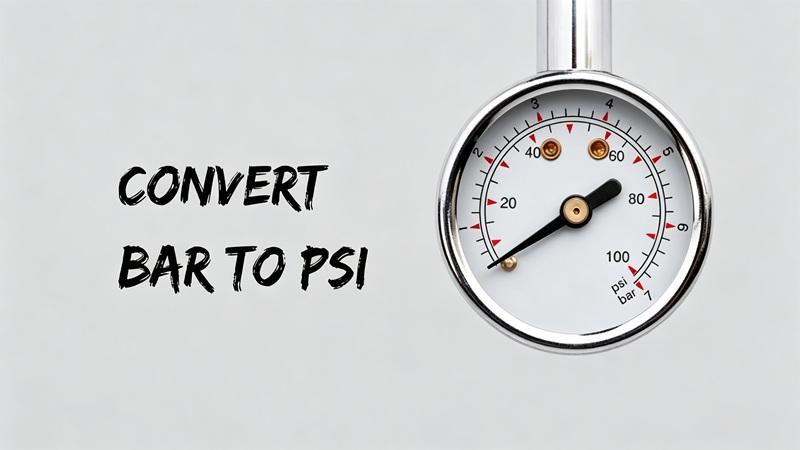
For engineering systems, PSI converts to bar. One PSI equals approximately 0.06895 bar. This is common in international industrial applications.
PSID (pounds per square inch differential) measures the difference between two pressure points. It is used in filters, valves, and flow systems.
Key conversions:
- 1 PSI = 6,894.76 pascals (Pa)
- 1 PSI ≈ 0.06895 bar
- PSID = pressure difference between two points
FAQ: PSI, PSIG, and PSIA
What is PSI in simple terms?
PSI is a pressure unit that measures force applied over one square inch of surface area. It describes how air, gas, or liquid exerts force within a system when confined to a given area. It is commonly used in gases, liquids, compressors, hydraulics, pneumatics, and tire systems because it is a simple and practical way to express pressure in real-world equipment.
Is PSI the same as PSIG?
PSI and PSIG are closely related but not exactly the same. PSIG specifically refers to gauge pressure, which measures pressure relative to atmospheric pressure. PSI is often used more generally, but in most everyday applications involving gauges, compressors, and tires, PSI readings are effectively PSIG unless otherwise stated. This is why context matters when interpreting pressure values.
What is normal atmospheric pressure in PSI?
Normal atmospheric pressure at sea level is about 14.7 PSI. This value represents the weight of the air column pressing down on surfaces at Earth’s surface. Atmospheric pressure is not constant everywhere. It changes with altitude, weather conditions, and temperature variations. Higher elevations have lower atmospheric pressure, which can slightly affect pressure readings in sensitive systems.
Why do pressure gauges use PSIG?
Pressure gauges use PSIG because they measure pressure relative to the surrounding air rather than a perfect vacuum. This makes them more practical for everyday use since most systems operate in atmospheric conditions. In compressors, tires, pneumatic tools, and hydraulic systems, what matters is how much pressure exists above ambient air pressure. PSIG readings make it easier to understand performance, safety limits, and operating conditions without needing to account for atmospheric pressure separately.
Conclusion
Understanding PSI, PSIG, and PSIA helps explain how pressure works in real systems. PSI is the base unit of pressure. PSIG measures pressure relative to atmospheric pressure. PSIA measures total pressure from a vacuum.
These differences matter in compressors, hydraulics, pneumatics, tire systems, fuel storage, and industrial equipment.
Correct interpretation improves safety, accuracy, and performance. It also reduces measurement errors.
For deeper understanding, focus on real-world use cases like compressor ratings, tire inflation, and unit conversions between PSI, bar, and pascals.
Need help understanding your air compressor guidelines and requirements? Contact us today for more information.